
Your guide to better chopstick etiquette (mostly Japanese)
The other day I was having lunch at one of the Asian-fusion restaurants in Zürich with a (non-Asian) friend. At one point, he speared a piece of chicken with one chopstick, brought it to his mouth and pried it off with his teeth. I must have a strange expression on my face, because he looked at me and asked me what was wrong.
Of course he did not know that in Japan, what he just did would be considered to be terribly rude, in the same way that someone who didn't grow up in Europe might not know about not putting your elbows on the table. I explained this to him, and he sort of snorted and said "well why don't you write a guide to chopstick manners on your site then!"
So, here it is: a guide to chopstick etiquette, Japanese style.
Chopstick etiquette level 1: The things you absolutely must not do
Breaking these rules is considered to be really bad.
Do not stick your chopsticks upright in your rice.
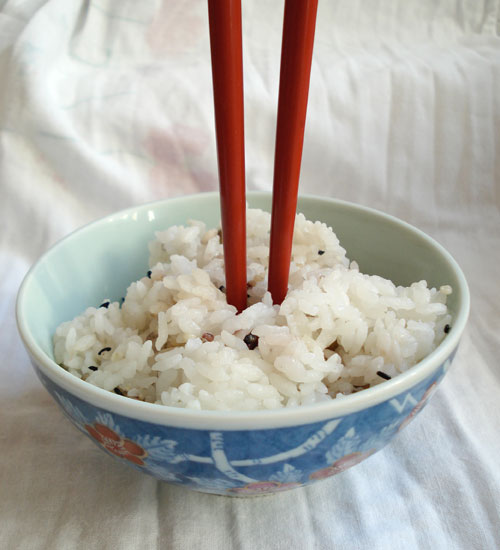
This is an absolute no-no because it's the way a bowl of rice is offered to the spirit of a dead person, at their deathbed or in front of their photograph on the household Buddhist altar.
Do not leave your chopsticks crossed on your plate or bowl, or the table.
This is for a similar reason to the above. I sometimes see chopsticks presented like this in food photos styled by non-Asians, and while I understand that it doesn't matter if your primary audience is not Asian, it still makes me cringe. If you must have chopsticks in your photo, keep them neatly together to stop your Asian viewers from wincing.
It's also not considered to be very good form to cross the working ends of your chopsticks while eating, but that can't be avoided sometimes depending on your level of chopstick dexterity.
(See below under Level 3 for how to put your chopsticks down.)
Do not use one chopstick at a time, especially not to spear food.
Chopsticks are always used together, as if they are attached to each other invisibly. Think of them as tweezers or tongs, not a pair of skewers.
Do not pass food from chopstick to chopstick.
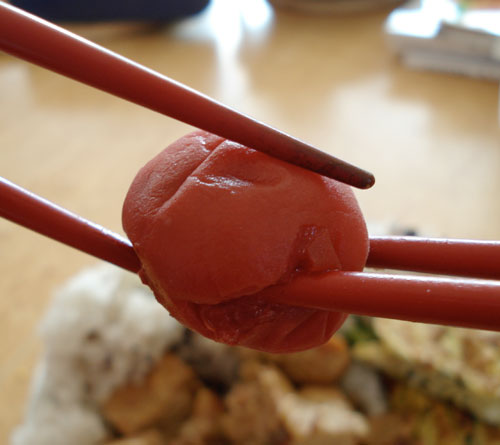
This is verboten because, when a person dies and is cremated, their bones are passed from chopstick to chopstick as a part of the Buddhist funeral ritual. (I remember doing this when my grandfather died.) You should also not pick one one piece of food with two pairs of chopsticks (held by two people).
(See no. 26 on this page of photos taken 2 weeks after the March 11, 2011 earthquake.)
Do not use unmatched chopsticks.
This not only looks funny, it also is reminiscent of some funeral rites. (If you haven't gotten the message yet, basically anything connected to funerals or death is considered you know, unlucky.)
Do not leave your chopsticks in your mouth while you do something else with your hands, like pick up plates or bowls.
This is also rather dangerous, should you slip and land face-down.
Do not wash your chopsticks off in your soup or in your beverage.
Rinsing bits of food off your chopsticks in your soup, or worse yet your water or tea (!) is very icky and just not done.
Do not use your chopsticks as toys, or pretend they are drumsticks and pound the table with them, or stick them in your mouth and pretend you are a funny vampire, or stick them up your nose.
Well, just in case.
Do not use chopsticks as hair accessories
(As suggested by Yong) I know some chopsticks are very pretty. I know that you see photos of kimono-clad maiko-san in Kyoto with pretty chopstick-like sticks in their hair. The are not chopsticks. They are hair ornaments called kanzashi. Chopsticks are for food. You would look silly with a beautiful fork stuck in your hair, yes?
Chopstick etiquette level 2: The things that you shouldn't do
These rules may not get a gasp out of your fellow Japanese diners, but they may frown a bit.
Do not rub your waribashi together.
Waribashi (割り箸) are those wooden chopsticks that you need to break apart. Some people rub them together as a matter of course, but this is only even needed if the chopsticks are so cheap that they are splintery. Doing this with good quality waribashi indicates that you think they are cheap, and therefore is an insult. (You may already know this rule - it's the one that's cited the most. I see a lot of people still doing this though.)
Do not suck on your chopsticks.
Your chopsticks are supposed to delicately convey your food to your mouth. Sucking or nibbling on them is not very polite.
Do not spear your food, even with both chopsticks.
Spearing with one chopstick is really bad, but even with two together it's not considered very polite. Spearing food is bad, period.
Do not shovel food directly from your rice bowl into your mouth.
You are supposed to pick your rice bowl or your miso soup bowl up in one hand and eat with your chopsticks in the other hand. You can bring your soup bowl right up to your mouth and sip. However, you are not supposed to do the same with your rice bowl; you should pick up your rice in morsels (Japanese rice is sticky enough to allow this) and bring it up to your mouth, using the bowl judiciously to catch any drips.
As for other plates or bowls, those are never picked up. Pick the food up from them with your chopsticks, then if necessary put it in your rice bowl - but ideally you should put it on a supplied plate of your own (a 取り皿, torizara, meaning 'plate to take things onto) or directly in your mouth. (Of course there are exceptions to this rule, such as raw-egg rice.)
Do not take food from a communal plate with your own chopsticks.
If you are served family-style, don't use your own chopsticks if at all possible to pick up food directly from it. This is considered to be unsanitary. You should use the supplied serving utensils. If there are no serving utensils though, you should turn your chopsticks the other way and use the fat or unused ends to pick up the food. (Though I don't know about the sanitary-ness of touching the used business end of the chopsticks in your grubby hands...)
And since so many people asked, "What about shabushabu, sukiyaki, etc?: These are all informal meals which are meant to be shared with the family or group all dipping into the same pot. So of course, the rules are going to be more relaxed. Now if you are in a more formal meal situation, and there is for example a communal plate of sashimi or something, you should first watch what others are doing, but if in doubt, flip your chopsticks around.
(Let us put this into Western meal terms. Rules are different for a meal at TGIFriday's vs. a formal dinner. The rules in this and the last level are for more formal occasions. I hope that makes it clearer!)
If you are serving other people (not yourself) from a communal dish, the basic rule is to flip your chopsticks around unless you know that person very well.
Do not let your chopsticks wander around.
Hovering your chopsticks from food to food or dish to dish, while you ponder what you are going to pick up, is considered to be rather off-putting.
Don't point at people or things with your chopsticks.
This is considered to be somewhat ruder than pointing with ones fingers.
Chopstick etiquette level 3: True chopstick refinement
In reality, I see Japanese people doing these things all the time. But if you can manage to master these rules, you are a truly refined chopstick user.
If you are supplied with hashi-oki (chopstick rests), use them.
Hashi-oki (箸置き)or chopstick rests are little ceramic objects that you are supposed to rest the ends of your chopsticks on when you put them down. If your place setting is supplied with them, use them instead of a plate or bowl when you put down your chopsticks. If you have waribashi, you can make a little impromptu chopstick rest out of the bag.
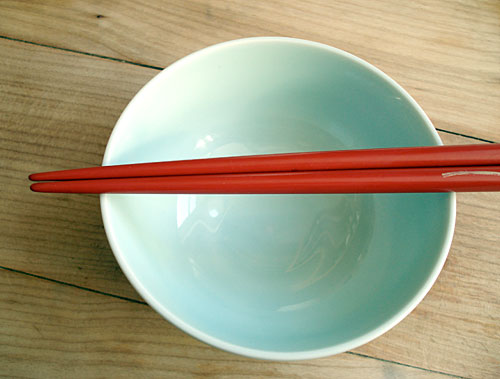
But if there are no chopstick rests, it's ok to put your chopsticks down on your bowl. Just be sure to keep them together, not crossed (see above).
Don't let liquids drip from your chopsticks.
Unsightly, and you could soil the table (or your clothes, etc.)
Don't stir your food around with your chopsticks.
This is considered to be rather insulting to the cook, not to mention...unsightly! If you are ever invited to a formal multicourse Japanese feast, you might want to remember this. On the other hand, if you are eating natto gohan or something though it's different.
So there you have it. As I wrote at the top, in mind that these are Japanese etiquette rules; the rules may differ in other Asian countries.
If you grew up using chopsticks, how do they compared to the rules you were taught?
Submitted by maki on 2009-01-22 13:30.
If you enjoyed this article, please consider becoming my patron via Patreon. ^_^
 Welcome to Just Hungry, where we serve authentic Japanese recipes and more! I'm






Comments
Aak
22 January, 2009 - 16:07
Permalink
Re: Your guide to better chopstick etiquette (mostly ...
Nice post. How about using your chopsticks to "cut" a large item, such as okonomiyaki? I think I saw a few Japanese friends doing this, so I started doing it. What I mean by "cut" is sticking in one or two of the chopsticks and drawing them out, dragging a line to the edge. When a piece is cut, however, I use both chopsticks to pick it up. Am I refined or a brute?
maki
22 January, 2009 - 21:05
Permalink
Re: Your guide to better chopstick etiquette (mostly ...
You're a brute! Just kidding. Well using one chopstick at any time is sort of a no-no, but hey, you are in an informal situation (okonomiyaki is snack food after all). But I guess you should try to do it with two chopsticks rather than one.
Stephanie
23 January, 2009 - 01:23
Permalink
Re: Your guide to better chopstick etiquette (mostly ...
I did not grow up with chopsticks by all means. My Dad refused to use chopsticks when he lived in Japan for a year [serving in the Marines], and neither my parents or siblings could use chopsticks to save their lives.
But I was kind of wondering about this very situation a while back, "cutting" your food with chopsticks. I was taken out to lunch at a "fancy" Japanese restaurant, here in San Francisco for work, and I ordered a tofu salad [only vegetarian item on the menu]. And the problem was that there was a 4" x 4" chunk of tofu on top and nothing to cut it with other than the chopsticks. I found it kind of cumbersome to eat it this way, I am so used to things being in [relatively] bite size pieces in Japanese restaurants, it just seemed odd. Am I just totally uncultured, or does this seem off to anyone else?
rdhead1
23 January, 2009 - 22:35
Permalink
Re: Your guide to better chopstick etiquette (mostly ...
That's a good point! I love "Agedashi Tofu". The pieces are rather large. I have always cut them in half with my chopsticks. How else does one eat this?
aya
25 January, 2009 - 00:51
Permalink
Re: Your guide to better chopstick etiquette (mostly ...
There is a "cutting" technique using chopsticks without separating two chopsticks. It's very hard to explain, but you kind of press down the food with the chopsticks while widening the tips of the chopsticks.
It only works for soft foods like tofu, soft fish, and braised vegetables.
"tender enough to cut with your chopsticks" is a commonly used phrase in Japan. Some expensive Japanese beef can be that tender.
yoko
22 January, 2009 - 16:08
Permalink
Re: Your guide to better chopstick etiquette (mostly ...
My dad often rubs waribashi together, but then, er, he's not always the most well-mannered man.
At home, where we only use chopstick rests for special occasions, we will rest chopsticks on top of a bowl, but only to signify that we're done with the meal, and always close together-- not splayed far apart.
My guy seems to have problems remembering these rules, much to my chagrin. :P
Kristin
22 January, 2009 - 16:12
Permalink
Re: Your guide to better chopstick etiquette (mostly ...
I'm pretty sure I follow all these rules except at the very end when you say don't stir your food with chopsticks-- is it OK to do it when miso settles in miso soup? Like, to get the miso to mix with the other liquid again after it's settled to the bottom of the bowl? If not, how should I do it? I do that to miso soup all the time in Japanese restaurants!
maki
22 January, 2009 - 20:43
Permalink
Re: Your guide to better chopstick etiquette (mostly ...
If the miso has settled too much, a stir is ok since it's the fault of the chef, or the server that enough time has passed for it to have settled! :D (The point of that rule I think is that messing around with your food with your chopsticks is considered sort of rude.)
Erika / Sweet Pea
22 January, 2009 - 16:29
Permalink
Re: Your guide to better chopstick etiquette (mostly ...
Excellent post, very informative. I knew the meaning of stick your chopsticks upright in a bowl, but other faux pas I did not know the route of. Many thanks.
rachel Tan
22 January, 2009 - 17:15
Permalink
Coming from a Chinese Family
Most of the Chinese chopstick etiquette that I know of seems very similar to the Japanese chopstick etiquette. Except that most chinese places that serve food with disposable chopsticks (waribashi) are the places that provide the cheap, low quality variety. As such, it's really common to see Chinese people rubbing their waribashi (good quality at japanese restaurants) together as a force of habit.
The jasmine rice we eat most of the time tends to not be as sticky and fluffy as japanese rice which is why I normally eat off of plates with spoons and forks. Chopsticks are mainly reserved for noodles in my family. When when eating out of rice bowls i think chopsticks are preferred.
I've never heard the "Don't stir your food around with your chopstick" rule before but that may be why my grandma stares at me every time I do that.
Oh... and i know I'm not supposed to spear food with my chopsticks, but fishballs are ridiculously hard to pick up without having them slip. Have any tips for that? =]
Jenny Islander
25 January, 2009 - 19:03
Permalink
Re: Coming from a Chinese Family
Back in the '80s I got to go on a student trip to Guangzhou that included lunch at a commune. None of us spoke a word of Chinese, none of the local people knew any English, and our official guide had gone off somewhere. We were sitting around getting hungrier and hungrier when people in aprons walked in, set a platter in the center of each table, and walked off. On the platter was a lengthwise half of a green gourd (squash? melon? large cucumber of a shape not known in the West?) with a tender skin and a small pool of sauce around it. And off they went again, not to return for some time . . . and the commune members were staring at us.
So we thought that maybe we, as the guests, were supposed to start the meal, so we started trying to eat this unsliced loaf-of-bread-sized vegetable(?). With chopsticks. I think we committed every sin in the Japanese list and probably extras considered nasty in China trying to get pieces off that melon(?). All the while wondering if we were trying to eat the centerpiece . . .
I can't remember what we ate at the commune, but the Great Melon Mystery still sticks with me.
bruleeblog
2 February, 2009 - 19:11
Permalink
Re: Coming from a Chinese Family
I'm from a Chinese family too and have also never heard of the "Don't stir your food around" rule. Or the "Do not shovel food directly from your rice bowl into your mouth" rule - as far as I know that's actually encouraged as opposed to the Japanese custom. Otherwise, all the other chopstick rules sound the same.
anon.
15 September, 2011 - 18:00
Permalink
Re: Coming from a Chinese Family
Hmm, I remember a chinese friend saying once that you're supposed to rub the wooden chopsticks together, so I did this when I went to Japan...
Oops...
Takshaka
22 January, 2009 - 17:20
Permalink
Re: Your guide to better chopstick etiquette (mostly ...
Thanks for writing this up, I will be sure to forward it to many of my friends who I am embarrassed to eat Japanese food with.
I had a question for you though. Whenever I have eaten any kind of nabe dish in Japan the only method I have seen for getting the tofu out of the nabe is to stab it through the hardened baked side with both chopsticks and bring it to your bowl from there. I hope that I do not sound nitpicky or anything, but is there a better method for getting the tofu out? I imagine using a ladle would be appropriate, maybe it is just my in laws but we rarely have a ladle at the table along with the nabe as transferring the vegetables from the nabe to your bowl quickly enough brings along plenty of the soup.
-Eric H.
maki
22 January, 2009 - 20:39
Permalink
Re: Your guide to better chopstick etiquette (mostly ...
Well, my mother was always skillful at getting tofu out of a nabe with saibashi (the long bamboo cooking chopsticks). It is hard though. A slotted spoon is a good tool for this. But do remember with home cooking, the rules aren't as strict, especially if your inlaws are stabbing away at their tofu :)
Yong L.
22 January, 2009 - 20:09
Permalink
Re: Your guide to better chopstick etiquette (mostly ...
I cringe every time some lady uses chopsticks to decorate her hair. I suppose from her perspective they are just beautiful sticks and she can do whatever she want to do with them, but from my Asian perspective, it's like wearing forks and knives.
maki
22 January, 2009 - 20:29
Permalink
Re: Your guide to better chopstick etiquette (mostly ...
Oh yea, I couldn't agree more! I'm going to add it to the post actually :)
Rina
25 January, 2009 - 22:48
Permalink
Re: Your guide to better chopstick etiquette (mostly ...
I am not even Asian and I find that highly embarassing, too! .. Wearing a bath yukata (the kind one could get in onsen or hotel) as kimono with right over left is a bit cringe-worthy, as well. Then again, these things are even less likely to be known by "commoners" than some of the basic chopstick rules...
anon.
26 January, 2009 - 21:14
Permalink
Re: Your guide to better chopstick etiquette (mostly ...
What about those hair sticks that are expressly designed to be used to hold hair? I have some from when I had very long hair which would be largely indistinguishable from food chopsticks except under some degree of scrutiny.
booklegger
22 January, 2009 - 22:36
Permalink
Re: Your guide to better chopstick etiquette (mostly ...
Don't use your chopsticks to move your dishes around. I have heard some Japanese comment on foreigners doing this, would you use your butter knife to move your plate back when you have finshed a plate of bread? Would you use your fork to pull your plate closer to you?
Erica
22 January, 2009 - 23:32
Permalink
Re: Your guide to better chopstick etiquette (mostly ...
I'm a westerner and, maybe I'm just bad-mannered, but yes. I have used a fork to pull a plate closer, though not often. However, I have not used a butter knife to push back a plate of bread. We never have plates for bread except at Christmas and Thanksgiving, because we don't eat bread at every meal.
I guess I see utensils as an extension of my hands, more or less. I wasn't really taught table manners growing up. Though stuff like chewing with your mouth open (and the resultant smacking of lips), elbows on the table, and talking with food in your mouth really annoys me.
lance
22 January, 2009 - 23:28
Permalink
Re: Your guide to better chopstick etiquette (mostly ...
Why is a person's bones passed from chopstick to chopstick as a part of the Buddhist funeral ritual? Sure better be good with using chopsticks. Sounds kinda scary, especially if you accidental drop the bones.
Lisa
23 January, 2009 - 02:22
Permalink
Re: Your guide to better chopstick etiquette (mostly ...
Note to self: stop putting fat end of chopsticks under top lip and pretending to be a walrus. You're making a fool of yourself.
Thanks for the tips!
anon.
23 January, 2009 - 05:20
Permalink
Re: Your guide to better chopstick etiquette (mostly ...
This is a great post!
lizarooski
23 January, 2009 - 05:55
Permalink
Re: Your guide to better chopstick etiquette (mostly ...
We had guests for dinner the other night (I live in Tokyo) and our Japanese friend showed us how she squeezes the juice out of lemon slices (when they are sliced like thin wheels). On her plate she stabs the lemon slice with one chopstick and leaves that chopstick vertical. She then uses her other chopstick to also stab through the lemon slice on the opposite side of the first chopstick and pulls the lemon slice about 1/3 of the way up the stationary chopstick. The non-stationary chopstick is then used to twist the lemon slice around in two full rotations, which squeezes all of the juice out of slice, but it all neatly rolls down the stationary chopstick rather than spraying all over the place. It was a fancy move! Her husband rolled his eyes and said that only the young girls do that.
Also, I don't know if you have the same annoyance, but my boyfriend gets really annoyed if I call chopsticks "chops" (which I never do in public and really just do to annoy him). Anyone else find that annoying?
Aleria
23 January, 2009 - 06:50
Permalink
Re: Your guide to better chopstick etiquette (mostly ...
THANK YOU!
I'd read a lot of these in an asian themed cookbook, but seeing as how it was written by a non asian I wasn't sure of the validity of the information.
Now I've got it straight from the source =D
Cheryl
23 January, 2009 - 08:04
Permalink
Re: Your guide to better chopstick etiquette (mostly ...
Hi there, I am Vietnamese and most of our chopstick etiquettes are similar to Japanese's. However, there is a rule "do not shovel food directly from the bowl to your mouth", which is different from my tradition. As Vietnamese rice is mostly long-grained, fluffy and only slightly sticky (thus it's not easy to pick up the rice with the chopstick, I have tried it and failed so many times), we often put the food on one side of the rice bowl, then use chopstick to draw the food and a slightly bigger amount of rice when eating. When doing it this way, the food and the rice is blended together very nicely. However, we also have a strict rule that the food and the rice are only drawn once, then the rice bowl must be put down and only picked up again when the chewing is finished (i.e. rice is not shovelled several times with one pick up). I think this rule is important to note because I have seen many of my friends (some of them are Japanese) struggle to pick up rice from chopsticks when coming to my house for a meal.
Okihwn
23 January, 2009 - 09:16
Permalink
Re: Your guide to better chopstick etiquette (mostly ...
Being Chinese, born and raised in Hawaii, it was OK to bring your rice bowl up to your mouth and scoop rice into your mouth. Most of the other stuff we followed.
Sile
23 January, 2009 - 16:37
Permalink
Re: Your guide to better chopstick etiquette (mostly ...
Let's start a new trend of wearing forks in the hair! We could be trend-setters!!! :D
I have to admit that I have used my chopsticks to make walrus tusks. But never in public!
I've also done the "shoveling of the last bits of rice in the bowl" move. But since I only do this at home and nobody sees me, it's ok. I would never do anything so rude in front of anyone else. I think that people do things differently when they know eyes are on them.
I also hold my chopsticks "improperly", but this is because when I hold them "properly" I can't pick anything up for some reason. :( I wonder why.
Helena
23 January, 2009 - 22:36
Permalink
Re: Your guide to better chopstick etiquette (mostly ...
Pick the food up from them with your chopsticks, then if necessary put it in your rice bowl - but ideally you should put it directly in your mouth.
I'm Chinese--I was taught that it was bad manners to go directly from the communual plate to the mouth, and you /had/ to put stuff down in your rice bowl. Interesting~
asylum01
9 February, 2016 - 06:22
Permalink
That rule applies to the
That rule applies to the traditional table setting that you see in Japanese movies, where everyone gets their own individual set of side dishes. If the food is served in a communal plate, then you would use the serving utensils to put it on your side plate first before eating.
Chinese food is almost always served in communal plates so it makes sense that the standard etiquette is to put the food in your rice bowl before eating. We also shovel rice from the bowl into our mouths because the rice we use isn't sticky enough to pick up like the Japanese do. If I'm served rice on a plate at a restaurant, I will use a fork while my white friends struggle with the chopsticks.
Also, I can often tell the difference between Chinese and Japanese by the way they eat their rice. Likewise, at a Korean restaurant, the Koreans will opt to use the metal spoon as much as possible while Chinese usually try to eat the whole meal with chopsticks. Koreans also don't like to lift up their bowls and dishes like the Japanese.
Kim
23 January, 2009 - 22:39
Permalink
What about shabu-shabu?
What is the proper etiquette for using chopsticks when eating shabu-shabu?
rdhead1
23 January, 2009 - 22:52
Permalink
Re: Your guide to better chopstick etiquette (mostly ...
I used to travel to Japan for business frequently, and had also lived there for a year. Most of this information I had learned over time because of my love of Japanese food, but it was often difficult to tell fellow American business travelers about correct etiquette, especially if they're your bosses. Many years ago, a Japanese friend of mine told me about the little "Japan in your Pocket" series of books published by the JTB. I purchased all of them. The "Eating in Japan" book Volume 3 was especially fun! Also on a similar note, and I know that it has nothing to do with chopstick etiquette, but I cringe every time that someone automatically dumps "soy sauce" on their rice. Just a pet peeve.
engmcmuffin
23 January, 2009 - 23:25
Permalink
Re: Your guide to better chopstick etiquette (mostly ...
I am Chinese and use chopsticks in my hair. Of course, I dont use my "hairsticks" for eating or the other way around. But I certainly look for cool looking chopsticks for my buns.
I think its ridiculous that buying "hairsticks" at stores is like.. $5 a piece when using chopsticks is way cheaper. Speaking of which.. I'd totally consider using a fork in my hair as well (assuming I never use it for food.) As long as they aren't too heavy, it should work. I don't personally think its particularly offensive. It might look silly to some people, but not offensive.
The rest of your advice is fine as for Chinese traditions. Except for the rice in bowl thing. The jasmine rice that chinese people eat is not as sticky and doesn't make nice clumps. Its expect that you pick up your bowl and "push" rice into your mouth.
Thanks for the guide! I never really understood the reasoning behind all the rules.
anon.
24 January, 2009 - 06:48
Permalink
Re: Your guide to better chopstick etiquette (mostly ...
There is nothing wrong using the fork in your hair to eat. The fork does 2 things for the price of one. What a deal! Just think about the previllage that you have your personal fork with you and the convinence.
Veriest
24 January, 2009 - 10:03
Permalink
Re: Your guide to better chopstick etiquette (mostly ...
Somewhat agreed with the hairsticks part - it can cost up to $30 USD just for a pair of high-quality plastic hairsticks; might as well use a pair of really swanky chopsticks if you're going to blow that much money on hair accessories.
Also, if you come from the parts of China that prefers shorter grained rice then it's not as appropriate to shovel food into your mouth. ;) But yeah - most of the advice seems to ring true for Chinese traditions.
djheydt
24 January, 2009 - 02:21
Permalink
Re: Your guide to better chopstick etiquette (mostly ...
Well, I have seen jewelry made of forks, spoons, and so on. Mostly in Berkeley in the sixties and seventies. Old silverware would be twisted, pounded flat, and otherwise dealt with ... and yes, I have seen forks as hair ornaments. Never bought any; I prefer plain old hairpins that don't show. :)
suzanne
24 January, 2009 - 04:42
Permalink
Re: Your guide to better chopstick etiquette (mostly ...
I grew up watching my elders hold their rice bowl in one bowl, and use their chopsticks to push rice or porridge towards their mouths. I guess, this is because it is not easy to pick up neat clumps of the long grain rice which is the staple on our dining table. Other than that, the rest of the rules are pretty similar. =]
Maeve
24 January, 2009 - 10:25
Permalink
Re: Your guide to better chopstick etiquette (mostly ...
Maki
Two further questions: why are Japanese chopsticks different from Chinese ones? And, as they appear to be shorter, can I assume that there is no significance attached to where you hold the chopsticks (higher or lower along the barrel)as there seems to be in China?
Thank you for educating me!
Maeve
maki
24 January, 2009 - 15:02
Permalink
Re: Your guide to better chopstick etiquette (mostly ...
I am just guessing here, but I believe that Japanese chopsticks just evolved to a shorter length because of the need for better control. I have noticed that Chinese chopsticks tend to be heavier as well as longer. There's no significance to where on the barrel to hold them (in Japan), but you are not supposed to let them cross while you're eating. Now I have to say...my chopsticks cross all the time, because I'm not that good at manupulating them! I blame this on the fact that I was forcibly trained to hold chopsticks in my right hand when I was little (I'm naturally left-handed). This is something that was done to kids all the time until fairly recently...may still be done in some households.
KayDat
27 January, 2009 - 18:17
Permalink
Re: Your guide to better chopstick etiquette (mostly ...
[quote=maki]I am just guessing here, but I believe that Japanese chopsticks just evolved to a shorter length because of the need for better control. I have noticed that Chinese chopsticks tend to be heavier as well as longer. There's no significance to where on the barrel to hold them (in Japan), but you are not supposed to let them cross while you're eating. Now I have to say...my chopsticks cross all the time, because I'm not that good at manupulating them! I blame this on the fact that I was forcibly trained to hold chopsticks in my right hand when I was little (I'm naturally left-handed). This is something that was done to kids all the time until fairly recently...may still be done in some households. [/quote]
I've looked into this on Wikipedia before, and indeed, I believe the difference in chopsticks is because Japanese Cuisine involves a lot of fish. Japanese, unlike Chinese, also pick flesh off the bone, whereas most Chinese pickup the whole piece of meat/fish, and manipulate the flesh removal in the mouth. Difference in culture I suppose.
Wikipedia actually has a lot of info in reguards to chopstick etiquette, mostly on Chinese, Japanese and Korean.
Looking at your post, I find that there are many similarities between Chinese and Japanese chopstick etiquette, but the biggest difference is probably shoveling food from bowl to mouth; this is very common and has absolutely no negative connotations in Chinese culture.
Samantha
25 January, 2009 - 01:05
Permalink
Re: Your guide to better chopstick etiquette (mostly ...
In my experience, the not using your own chopsticks to pull from a communal dish rule is a bit flexible. Both with my coworkers and with friends I was told that it would be fine to use my chopsticks as usual to get food from the dish because "we're all friends here". This was, of course, after I had already turned my chopsticks around to go for it. >.> I wouldn't recommend doing it at first, wait until invited to do so or watch what other people are doing, but it's for sure not a hard and fast rule...
Or people in Chiba are just more relaxed about table manners.
dita
25 January, 2009 - 15:09
Permalink
What when there are no chopstick rests?
I find your site great and this guide very helpful. One of the very few things I actually knew was not to rest the chopstick over the bowl... However, I often don't get chopstick rests so... where should I rest them? I have sometimes placed them oblique on the saucer (if any), or on (gasp!) the corner of the box (if any). Most often I place them on the napkin (if any!) but this doesn't look very appealing. I tend to gesticulate a lot, so keeping them in my hand during a meal will inevitable lead me to commit several of the other sins (waving them around, pointing, etc.) On hindsight... what a barbarian I am!
maki
25 January, 2009 - 19:38
Permalink
Re: What when there are no chopstick rests?
The rules says "if there ARE chopsticks rests.." So, if you DON'T have chopstick rests, it's a more informal meal, and you can rest them on your bowl or on the edge of your plate and so on.
aegd
25 January, 2009 - 18:36
Permalink
Re: Your guide to better chopstick etiquette (mostly ...
"Do not take food from a communal plate with your own chopsticks."
How does this work if you're eating しゃぶしゃぶ or 焼肉?
I was with my class to a しゃぶしゃぶ place and I don't remember our teachers saying anything about not using our own chopsticks to take from the communal plates. But then again, we kind of skipped most of the japanese etiquette. My teacher even poured me beer once. :D
The times I've eaten 焼肉 i've only gone with other exchange students, but then I think we used the supplied tools to bring food from the plates to the grill and to turn around the food on the grill. We only used our own chopsticks to take our own food from the grill.
I think this was a interesting read, but I have to say that most of it feels kind of self-explanatory. I think I follow most of these rules well, with the exception of the "don't lift up other bowls then rice and soup". I usually lift up the curry and donburi bowls skoop up the last pieces of food, because at the end the rice tends to fall apart and I really don't feel like leaving food in the bowl. Where I come from that's bad manners! :D
elise
26 January, 2009 - 20:47
Permalink
Re: Your guide to better chopstick etiquette (mostly ...
Very helpful, thanks Maki!
When I lived in Kyoto, my roommate, another gaijin, who had lived in Japan for years, was given the official job at our aikido club of teaching me Japanese manners. Or at least looking out for me and warning me when I was about to, or in the middle of, making some huge faux pax. So many things to remember!
Cathe
27 January, 2009 - 02:38
Permalink
Re: Your guide to better chopstick etiquette (mostly ...
I always thought it was ok to lift your rice bowl a foot away from your face to eat it. I guess this is a mistake that people do.
maki
27 January, 2009 - 20:01
Permalink
Re: Your guide to better chopstick etiquette (mostly ...
No no no, please read what I wrote :) It IS ok to bring the rice bowl up to near your face, but NOT ok to bring it directly to your mouth and shovel the rice in, at least not in a formal setting.
kero
27 January, 2009 - 08:08
Permalink
Re: Your guide to better chopstick etiquette (mostly ...
Actually most of your guide also applies to the chinese :)
bk201
27 January, 2009 - 12:21
Permalink
Re: Your guide to better chopstick etiquette (mostly ...
Brought up by Chinese parents, chop stick etiquette hasn't been a big issue.
I'm amazed that I had been unconsciously doing a few of these things, such as not shovelling from the rice bowl. I don't shovel when I eat Japanese food xd
kimcheesoup
27 January, 2009 - 21:56
Permalink
Re: Your guide to better chopstick etiquette (mostly ...
i liked your post very much!
being japanese, i used to think that some of these things should be common sense, but i guess it really is culturally taught.....
i also want to add that while these tips are customary for JAPANESE etiquette, it is not across the board for all asian table manners - for example in Korean etiquette (i'm also Korean), you should leave your rice bowl on the table instead of picking it up, and instead of eating rice with chopsticks, you use a long handled spoon.
different asian cultures have slightly different table manners too.
Katie
28 January, 2009 - 00:01
Permalink
Re: Your guide to better chopstick etiquette (mostly ...
I'm half-Japanese, raised in the States, and my grandma made sure we knew about chopstick etiquette. She would scowl and make comments like "What kind of thing is this." The one thing I am guilty of is rubbing together my waribashi. That is because in my experience most of the restaurants here, even the Japanese ones, have really cheap waribashi. I didn't used to rub them together, but then I had the misfortune of being stabbed by a splinter from cheap waribashi. It wasn't pleasant, so now I pretty much always do it, but I always try to be discreet.
anon.
28 January, 2009 - 08:46
Permalink
Re: Your guide to better chopstick etiquette (mostly ...
Being Japanese, I did not grow up in a traditional Japanese family since my parents are British. However, I'm quite certain I have broken some Japanese etiquettes. I do bath my rice with soysauce, which is how I like it. I also do eat rice from a bowl to my mouth. So much to remember! It was interesting.
Mitsu
28 January, 2009 - 21:37
Permalink
Re: Your guide to better chopstick etiquette (mostly ...
I'm SOOOOO glad you pointed out the rubbing the chopsticks thing. So many people do it thinking that it's okay or good to do, but it peeves me so much because it is so so so rude.
Thank you for saying it like it is.
anon.
3 February, 2009 - 06:58
Permalink
Re: Your guide to better chopstick etiquette (mostly ...
Thanks so much for covering this! My boyfriend is Japanese, and I am American, and while I knew chopsticks were a sensitive issue, thanks to some Korean friends, nobody's perfect! One time the two of us were having dim sum, and he was rushing me to try this, try that, (and slippery foods are hard with chopsticks,btw) anyway, he was rushing me, and in exasperation I let go of my chopsticks to take a plate he was handing me, momentarily leaving my chopsticks standing straight up in my bowl of lotus-wrapped rice, and he was horrified and scolded me for being so rude...now I understand the "dead ancestors" connection...
army_kitten
5 February, 2009 - 03:39
Permalink
Re: Your guide to better chopstick etiquette (mostly ...
i'm sooo guilty of shoveling food directly into my mouth from the rice bowl, but i'm usually eating brown rice that isn't sticky at all (and i don't do it in restaurants, or in front of other people, so...).
worst of all, though, is the terrible habit i picked up from one of my korean roommates of sitting with chopsticks hanging out of her mouth while at her computer (after eating). at first i tried it because i couldn't figure out how she was doing it, but then it became a habit, too. we did way too much eating in front of our computers. maybe that was the problem. XP
i'll try to remember to be more discreet in rubbing my waribashi together the next time i'm at a sushi restaurant, though.
thank you for this very informative guide!
noriko
8 February, 2009 - 04:22
Permalink
Re: Your guide to better chopstick etiquette (mostly ...
Well done! You covered the etiquette very well. I agree with most of your points. As a Japanese person living in the States, If I see someone stick their chopsticks upright in their rice, I feel horrified – but this is cultural thing and you just have to politely point it out. I cringe at the very sight of people playing with chopsticks like drumsticks - this is just so rude.
When it comes to shoveling rice into my mouth, I love it! I sometimes make “Chawan-Mushi (mine is more like Donburi-mushi), and dump some Chawan-mushi into a rice bowl, mix rice and chawan-mushi well and shovel it to my mouth with a big noise. Heavenly! But I do it only at home with my husband. It is my private ritual. I call it “Way of Truck Drivers”.
Some people seem to have a hard time using chopsticks for Tofu. I have no problem but even some Japanese have a hard time, so just relax and ask for a spoon. No one will laugh at you.
As for rubbing chopsticks, I do not find it particularly rude but I definitely find it “low class”.
But more than anything else, I cringe at people using sugar for their green tea or people drinking coca cola with sushi (etiquette can be taught, but palates can’t be).
noriko
8 February, 2009 - 04:23
Permalink
Re: Your guide to better chopstick etiquette (mostly ...
Well done! You covered the etiquette very well. I agree with most of your points. As a Japanese person living in the States, If I see someone stick their chopsticks upright in their rice, I feel horrified – but this is cultural thing and you just have to politely point it out. I cringe at the very sight of people playing with chopsticks like drumsticks - this is just so rude.
When it comes to shoveling rice into my mouth, I love it! I sometimes make “Chawan-Mushi (mine is more like Donburi-mushi), and dump some Chawan-mushi into a rice bowl, mix rice and chawan-mushi well and shovel it to my mouth with a big noise. Heavenly! But I do it only at home with my husband. It is my private ritual. I call it “Way of Truck Drivers”.
Some people seem to have a hard time using chopsticks for Tofu. I have no problem but even some Japanese have a hard time, so just relax and ask for a spoon. No one will laugh at you.
As for rubbing chopsticks, I do not find it particularly rude but I definitely find it “low class”.
But more than anything else, I cringe at people using sugar for their green tea or people drinking coca cola with sushi (etiquette can be taught, but palates can’t be).
Valerie
22 February, 2009 - 04:53
Permalink
Re: Your guide to better chopstick etiquette (mostly ...
I live in Vietnam for part of the year and many of the rules of etiquette that you mention are the same in Vietnam. As with rules of etiquette everywhere, they are sometimes broken. I know that chopsticks are to be turned around when eating communally, but it isn't always done. As for eating rice from a bowl very close to the mouth and shovelling, I was told it was very rude, but I saw many people do it. I'm not sure how, as I tried it a few times and wasn't able to do it. Luckily for me, they think I have good manners in that department.
I've just discovered this site and really like it. I love Japanese food and would like to know how to prepare more vegetarian options. Thanks.
anon.
22 March, 2009 - 06:10
Permalink
Re: Your guide to better chopstick etiquette (mostly ...
nice ettiquette guide!
well done.
akemi
27 April, 2009 - 12:06
Permalink
Re: Your guide to better chopstick etiquette (mostly ...
I always shovel the rice in my mouth (well, our rice isn't sticky)...now I know better heehee~ Thanks for the great information! (@^-^@)
akemi
27 April, 2009 - 12:06
Permalink
Re: Your guide to better chopstick etiquette (mostly ...
I always shovel the rice in my mouth (well, our rice isn't sticky)...now I know better heehee~ Thanks for the great information! (@^-^@)
Miss J
6 August, 2009 - 21:25
Permalink
Origami chopstick rest
I'm non-Asian, but learned to eat with chopsticks when I was five or six, because my dad loved Chinese food. I didn't learn any special etiquette, but everything listed here (aside from spearing food and leaving them on your plate) is bad manners with a fork, so I guess it wasn't really an issue.
But I've always been at a loss for where to put my chopsticks after I was told it's bad manners to put them across a bowl or plate.
Here's a video I came across for how to make an origami rest for disposable chopsticks, out of the wrapper.
http://www.youtube.com/watch?v=_rYtwIH52hM
Yuki
19 August, 2009 - 05:58
Permalink
Re: Your guide to better chopstick etiquette (mostly ...
[quote]If you are served family-style, don’t use your own chopsticks if at all possible to pick up food directly from it. This is considered to be unsanitary. You should use the supplied serving utensils. If there are no serving utensils though, you should turn your chopsticks the other way and use the fat or unused ends to pick up the food.[/quote]
I was taught by a Japanese family to not use the fat ends to take food from the main plate. Mom (well the mother of the family) said that even if we had washed our hands that the fat ends were still unsanitary to use and that growing up they were instructed not to use the fat ends. Then again I suppose every family is different.
phyphy
30 September, 2009 - 12:26
Permalink
Re: Your guide to better chopstick etiquette (mostly ...
I'm chinese raised in Singapore.. Many teenagers nowadays don't know the proper usage of chopsticks, and are often guilty of the rules stated here. Luckily, my mom was very particular in using the chopsticks. It kinda irritates me when I see chinese breaking chopsticks rules...
When we use chopsticks, the top end of the chopsticks are not supposed to be crossed, when holding chopsticks, they are supposed to be parrell (when not picking up food).
The right way of using chopsticks would allow the person to be able to pick up food as small as a grain of rice to a piece of food as big as a fist.
And, I feel proud to be able to use chopsticks. Hehehe.
Search
4 November, 2009 - 06:20
Permalink
Played it by ear
I learned how to use chopsticks when I was in my 20's mainly. Having little money and trying to find ways to eat large meals while in a shrinking budget buffets were always the best choice.
From this I learned one day to actualy use chopsticks out of respect of the culture and to learn something different. Kinda a 'when in Rome..' kinda thing.
Along the way though I did learn about the rubbing of chopsticks and how it was to take splinters off. Now I realize it may have been a bad thing as I have been gulity of doing this even at a Japanese Haibatchi resturant. As well in all fairness we all know that those chopsticks are not made by the most mastered hands.
As someone pointed out earlier, most of this I guess I just assumed due to the same respect from western culture. (Although I'd like to see someone stick 2 forks in their mouths and try to act like a walurus!)
anon.
12 January, 2010 - 00:05
Permalink
From a Taiwanese Reader
This post was very interesting!!
I never really noticed the differences between chopstick etiquette in the neighboring Asian countries. I guess since my family is mostly Taiwanese (American), our little island's between the two powerhouses of China and Japan and we have a lot of influence from both countries.
Mostly all of our "rules" are the same. Like the others noticed, though, it's not considered impolite to push our rice to our mouth - even though the rice my family eats isn't the long-grained, it's actually Japanese rice.
I don't know about proper etiquette, but I do know that all my family uses our rice bowls as our chopstick rests, and if there is sauce or some such dripping from our kuaizi, it's acceptable to quickly lick it off, since we use our own chopsticks to grab from the communal plate. [Once we touch a piece of food though, we have to keep it]
And I often use my chopsticks as a fork and knife... that might just be my simple barbarianism. :)
I adore your blog.
noodles
13 January, 2010 - 05:17
Permalink
Re: Your guide to better chopstick etiquette (mostly ...
I believed quite a number of people have already said, but the custom for these is quite similar to Chinese. I didn't have a clue that shoving rice from bowl to mouth is rude though, and did that everywhere even in korea. oops.
Matt
22 February, 2010 - 19:40
Permalink
Re: Your guide to better chopstick etiquette (mostly ...
I had sushi for the first time a couple of months ago. We ordered sushi and sashimi. It was a really nice restaurant and the food was artfully arranged on our plates. The sashimi was on beds of cold white rice but the pieces were very large. The pieces were so large that if I were to put the entire piece of fish in my mouth I wouldn't be able to chew it.
In the back of my mind I wanted to ask if the chef would half the pieces for me but I thought that it might be taken as an insult. So, I resorted to picking up each piece and taking a bite out of it and then putting the rest on the plate. It felt clumsy and I didn't like doing it. What should I do next time I have pieces of food that are too large to eat and am using chopsticks at a restaurant?
maki
23 February, 2010 - 09:40
Permalink
Re: Your guide to better chopstick etiquette (mostly ...
Hi Matt, it's really the task of the chef to prepare the food so that it's easy to eat for you. If the pieces were too big and you didn't want to send it back, it's perfectly fine to either cut it somehow yourself, or as you did, take a bite out and put it back, etc. I know there's a tendency at some sushi places to make 'jumbo' size pieces, which are supposed to look impressive, but as you said, they aren't always that easy to eat!
t
9 March, 2010 - 02:14
Permalink
Re: Your guide to better chopstick etiquette (mostly ...
I come from Vancouver, which is about half Asian in terms of population, and as a result we have about a million and a half cheap asian resteraunts that provide cheap waribashi. What I was always taught is that if you must rub( which in many cases, you must )to do it under the table, so it's not like you are making a big deal about it and rubbing it in the nose of the staff.
LadyB
19 April, 2010 - 23:34
Permalink
Re: Your guide to better chopstick etiquette (mostly ...
Ooh, I learned something. ^_^
While, ethically, I am so white I glow in the dark, I did grow up using chopsticks. I remember my Mom telling me about not sticking the chopsticks straight up, but could never remember quite why it was such a faux pas. (She had a Japanese exchange-student friend back in the late 70's that she learned all this stuff from.) So, thanks. ^-^
So there's stuff here I learned, but now I know the reason why. Sweet.
poor Michael
28 April, 2010 - 18:14
Permalink
Re: Your guide to better chopstick etiquette (mostly ...
Spent a yr in Japan w/ U.S. Navy...Sushi was served in smaller pieces than I now get in here in the U.S. which if wrapped in nori are difficult to eat w/ 'sticks...but in Japan,in many restaurants, many people ate sushi w/ their fingers, not w/ 'sticks...Monkey see, monkey do. Was I wrong?
maki
28 April, 2010 - 20:15
Permalink
Re: Your guide to better chopstick etiquette (mostly ...
Nigirizushi can be eaten with your hands, especially at the counter.
Jasmyn
6 May, 2010 - 14:33
Permalink
Re: Your guide to better chopstick etiquette (mostly ...
This is a fantastic guide! I see now several things that I am guilty of and I will do my best to correct it. Thanks so much for sharing.
Nox
6 June, 2010 - 21:03
Permalink
Re: Your guide to better chopstick etiquette (mostly ...
I had a friend who claimed that he used to go to a japanese or asian restaurant of some sort that had only asian people working there. He claimed that after his meal he'd leave one chopstick (or maybe it was both i can't remember) straight up in his rice and that that meant one was in mourning. He then said that he got his meal for free when he did this.
Is he full of it? is this really a custom somewhere? or was he just being rude?
(really helpful blog by the way)
i don't plan on trying this for if a meal is good it would be rude to trick them into getting it free, i consider it rude....
maki
6 June, 2010 - 22:56
Permalink
Re: Your guide to better chopstick etiquette (mostly ...
Well I can only tell you that it certainly work in a Japanese restaurant. They'll just think you're being rude. I don't know about other Asian restaurants (not all Asians are alike...)
anon.
22 June, 2010 - 08:01
Permalink
Re: Your guide to better chopstick etiquette (mostly ...
I was reading "Dog Man" and came across a description of using chopsticks "high style". Can you describe what that is? Thanks
K Lee
4 October, 2010 - 02:12
Permalink
Re: Your guide to better chopstick etiquette (mostly ...
Hi,
Great post! Thanks!
As a westerner who uses chopsticks (I taught myself, as neither of my parents can use them at all!) I'm wondering- what is the proper way to eat long noodles? (I honestly eat with chopsticks and fork with equal frequency, sometimes it depends on which I grab out of the drainboard! But I've never figured out the proper way to eat noodles, with either fork OR chopsticks!)
Am I supposed to wrap them around the chopsticks? (I often do this, but it seems to me, it might be weird if not rude.) Slurp them? Cut them into smaller pieces? I use chopsticks instead of fork to eat them because they always fall OFF the fork when I try...but I still haven't a clue what to do with them really.
Thanks!
maki
4 October, 2010 - 09:11
Permalink
Re: Your guide to better chopstick etiquette (mostly ...
In Japan at least, it's fine to slurp long noodles, and make lots of noise while you're doing it, especially if they come in soup like ramen or udon. (Pasta served with a fork should not be slurped though.)
K Lee
5 October, 2010 - 00:36
Permalink
Re: Your guide to better chopstick etiquette (mostly ...
Cool, thanks. :) That's definitely not considered polite in America, but it really goes to show how different things are in different cultures!
I wouldn't want to try to slurp spaghetti! lol. That would make a huge mess!
chris
19 October, 2010 - 15:58
Permalink
holding chopsticks
i hold my chopsticks abnormaly to the diagrams but it works for me, is that ok
anon.
23 November, 2010 - 01:09
Permalink
Re: Your guide to better chopstick etiquette (mostly ...
What about those bowls with notches and holes to put chopsticks in? Is it a western concept?
maki
23 November, 2010 - 02:15
Permalink
Re: Your guide to better chopstick etiquette (mostly ...
I've never seen such bowls, I guess it's a modern invention.
LadyCarolinaJounsion
15 March, 2016 - 00:48
Permalink
bowl with a hole in it .
I have one green bowl with a notch and 2 connected holes for the chopsticks to sit, between use & I like it .
Spock
15 January, 2011 - 08:50
Permalink
Re: Your guide to better chopstick etiquette (mostly ...
The only chopstick etiquette I know is Japanese, but I didn't know that rubbing waribashi together was considered rude. The ones we get at resturants around here pretty cheap, so we've been safe, but I'll pay attention to that from now on. I also didn't know you shouldn't stir the food around on the plate. I don't, but good to know. I am guilty of shoveling the last bits of rice in the bowl into my mouth at the end of the meal, though. *Blush* I'll have to stop that...
anon.
3 February, 2011 - 01:03
Permalink
Re: Your guide to better chopstick etiquette (mostly ...
I don't think sticking your chopsticks upright in your rice is such a bad thing. There are no such things as spirits or luck. I find such superstitions offensive. Here's an idea, how about NOT USING COOKING UTENSILS FOR CORPSES! I mean, invent a special pair of tongs or something else, you know? How hard is that? Someone has to take a stand and stop the endless cycle of stupidity and respect for irrational belief.
Theroha
8 May, 2012 - 05:53
Permalink
Re: Your guide to better chopstick etiquette (mostly ...
I don't care what your personal beliefs are. That was just plain rude. We come here to enjoy learning about different cultures. If you can't respect that, never darken our message boards again.
Amy
4 February, 2011 - 23:19
Permalink
Re: Your guide to better chopstick etiquette (mostly ...
Also, re: not sticking your chopsticks straight up in a bowl, it is reminiscent of incense burned at funerals...
judith scott
5 February, 2011 - 05:53
Permalink
Re: Your guide to better chopstick etiquette (mostly ...
i've been reading your newsletters for quite a long while now. today is the first day i've understood why i continue to read your site. RITUALS. social custom,origin of eating habits and foods.
you are absolutely correct to say that life is moving very quickly. so quickly that we've been separated from our blood line foods,our blood line rituals,our spirit rituals. these customs,if you want to call them that,are deeply important for all humans. be they japanese,black(as i am)or whatever. they're grounding,they slow down time,and they allow each of us a chance to disconnect from pace and speed and slow down to feel our breathe and our hearts beat. to think about where our food comes from. to actually TASTE food. i appreciate your response to the clearly misinformed disconnected individual. perhaps, if this individual had taken the time to reflect more deeply on what you shared,they'd discover there were in fact outdated behaviors and long held onto personal habits in their own epicurial life.
anon.
21 February, 2011 - 01:46
Permalink
Re: Your guide to better chopstick etiquette (mostly ...
DO NOT PRETEND TO BE HARRY POTTER OR HIS FRIENDS WITH YOUR CHOPSTICKS
DO NOT POKE YOUR SEAT-MATE WITH YOUR CHOPSTICKS AND THEN LOOK AWAY
anon.
21 February, 2011 - 23:10
Permalink
Re: Your guide to better chopstick etiquette (mostly ...
this guide is great! i think for a westerner my chopstick etiquette is pretty spot on, but here's a question that's always been at the back of my mind.
whenever you see an asian chopstick user eat, the food is transferred to the mouth as discreetly as possible. the chopsticks never appear to touch their lips and the food is gently dropped or in some cases almost seems to be tossed into the mouth. westerners, however, seem to place their food directly into their mouth, allowing the chopsticks into their mouth well past the lips and pointing down the throat. i'm guessing this is a habit of fork users who generally place the utensil completely in their mouth to eat.
is it rude to put chopsticks into your mouth? or is this just a matter of speed and comfort?
Marilyn
26 May, 2011 - 14:08
Permalink
Re: Your guide to better chopstick etiquette (mostly ...
Where to place my chopsticks after my meal? Japan usually have a paper holder/cover for chopsticks, do I slot the used chopsticks back to the cover? Is it rude if I do that?
maki
27 May, 2011 - 02:41
Permalink
Re: Your guide to better chopstick etiquette (mostly ...
It's fine to just leave your chopsticks resting (put together, not like crossing or anything) on a plate or so, if chopstick rests are not provided. Some people make a little makeshift chopstick rest out of the paper envelope the disposable chopsticks come in by folding it, and use that.
Marilyn
27 May, 2011 - 06:01
Permalink
Re: Your guide to better chopstick etiquette (mostly ...
Thanks Maki, I love the idea of making a holder out of the paper envelope. But I would still want to know if putting the disposable chopsticks back in the envelope after using is acceptable because we had a discussion with friends over this topic.
anon.
29 May, 2011 - 19:26
Permalink
Re: Your guide to better chopstick etiquette (mostly ...
It’s good etiquette to slip them back into their paper sleeve once you're finished with you're meal rather than to leave them on your plate with the remnants of what you ate still stuck to them.
clarit.
11 June, 2011 - 03:21
Permalink
Re: Your guide to better chopstick etiquette (mostly ...
I'm Korean, born and raised in Argentina.
I remember being told off a lot as a kid for stirring my food with my chopsticks. I think being picky is specially considered rude and stirring the side dishes to avoid vegetables annoyed my parents and grandma a lot.
I'm still a little picky with some vegetables, but I learned how not to pick them up VERY discreetly. (I calculate the trajectory of my chospticks first) lol.
Just thought I'd share.
Pedro1874
12 June, 2011 - 10:42
Permalink
Re: Your guide to better chopstick etiquette (mostly ...
Is there any etiquette as to which type of chopsticks are best? Do you use plastic/ivory or other material in your home when you have guests? Would you use the disposable wooden ones in your home? What type do they use in good restaurants in Japan?
anon.
18 September, 2011 - 20:29
Permalink
Re: Your guide to better chopstick etiquette (mostly ...
Actually a question.......does sticking silverware such a knife straight up in a burger the same as placing chopsticks straight up in rice?
Twitter follower
23 September, 2011 - 23:19
Permalink
Re: Your guide to better chopstick etiquette (mostly ...
I keep finding the white bunny all over!
Please do not take too much time to answer i know you have other things on your plate.
I just returned from a very short trip tonTokyo and i saw people resting their hashi in front of them and then picking them upnwith both hands to position.
I only eveer picked them up from my rest withnone hand, and then flipped to resting position and then put back down.
There are lots of posts about how to, but not how to put down. A link to a how to site if you know of one would help me the next time i eat sushi in japan.
ありがとございました
Tara V
20 December, 2011 - 02:47
Permalink
Re: Your guide to better chopstick etiquette (mostly ...
I read through all of these comments to make sure I didn't reask something (I remember the onigiri rice comments that kept getting posted x_x) so Im really sorry if I missed this.
Slurping bugs me so bad (and Im Filipino FTW!) but I love ramen... When using chopsticks I (discreetly) twirl the noodles around them so they don't fall. Is this ok? If I can relax about it that would be awesome :)
Concerning forks in hair, I remember there was a fad at my school of boiling cheap toothbrushes and bending them into bracelets,lol.
Also, love this blog <3
maki
20 December, 2011 - 11:03
Permalink
Re: Your guide to better chopstick etiquette (mostly ...
Twirling is fine. And you can relax when eating something informal like ramen anyway.
Lizzy
19 January, 2012 - 01:56
Permalink
Re: Your guide to better chopstick etiquette (mostly ...
stick my chopsticks in my rice all the time but i've never done it straight up. Is it ok for them to be resting on the side a bit while ur moving from kitchen to table perhaps? I also have to break the habit of pointing when i speak. Im used to speaking with my hands (HISPANIC ^^) and i do it even when im not thinking about it sometimes. Otherwise all this stuff seemed somewhat common sense like the funny vampire haha. Nice writing btw and very informative.
devany
1 February, 2012 - 03:18
Permalink
Re: Your guide to better chopstick etiquette (mostly ...
I will say that i do rub waribashi together, but you should see the splintery ones here in the US! My grandmother (whose Japanese) will always do it discreetly under the table and whisper to me that it was okay, because they were so splintery
Rose J
10 May, 2012 - 01:27
Permalink
Re: Your guide to better chopstick etiquette (mostly ...
Thank you for the clarification.
I have a question though about resting chopsticks. I normally do not put mine in my bowl of ramen or soup, but instead lay then down across the side or middle of bowl across it, like you have in the 'Chopstick Rests' section.
Is that alright?
Kurt Werle
18 May, 2012 - 23:28
Permalink
When I'm done?
What do I do with my 'sticks when I'm done eating?
anon.
21 May, 2012 - 04:19
Permalink
Re: Your guide to better chopstick etiquette (mostly ...
My friend brought me chopsticks from china. Is it weird if I take them to a restaurant with me to use?
anon.
17 June, 2012 - 10:03
Permalink
Re: Your guide to better chopstick etiquette (mostly ...
"Do not rub your waribashi together."
Ok you clearly have no idea on what you are talking about, I stopped reading at this point.
Cheap chopsticks (the square ones) have splinters = rubbing removes the splinters.
Obviously with nicer round chopsticks you don't have to rub them since they won't have splinters.
anon.
20 June, 2012 - 19:34
Permalink
Re: Your guide to better chopstick etiquette (mostly ...
Well, if you kept reading she says:
**Some people rub them together as a matter of course, but this is only even needed if the chopsticks are so cheap that they are splintery. Doing this with good quality waribashi indicates that you think they are cheap, and therefore is an insult.***
You just repeated the same thing she just said in different words. So clearly, you also have no idea what you are talking about.
bacalao
20 June, 2012 - 06:12
Permalink
Re: Your guide to better chopstick etiquette (mostly ...
hi makiko, i got the link to your blog from kat's post on quora, would making your own chopstick rest from a chopstick wrapper be frowned upon? a higher end restaurant would not have disposable chopsticks but many others still do
maki
30 June, 2012 - 21:15
Permalink
Re: Your guide to better chopstick etiquette (mostly ...
If you're supplied disposable chopsticks making a rest with the wrapper is fine, or just resting it on the edge of a plate or something. Disposable chopstick imply informality anyway so the rules are more relaxed. (Sort of like going to a place with plastic forks and knives.)
anon.
28 June, 2012 - 07:49
Permalink
Re: Your guide to better chopstick etiquette (mostly ...
Hmm... As for rule #4 in section 2 (don't shovel rice directly from your bowl to your mouth) what about when you're in a fast-foodish place like sukiya, and the rice ends up getting enough sauce/grease on it that it breaks apart and you can't pick it up like normal? And what about the last 2-3 chopstickfuls of rice at the bottom of the bowl when you're done? I mean, I get not doing that for a full bowl, but is there another way to get the rice out once it has broken apart like that?
maki
30 June, 2012 - 21:16
Permalink
Re: Your guide to better chopstick etiquette (mostly ...
In informal fast-foody places the rules are way more relaxed, as I've said. If you want to fit in, see how other people are eating and follow their lead.
Island Girl
30 June, 2012 - 19:56
Permalink
Re: Your guide to better chopstick etiquette (mostly ...
My hubby's 100% Japanese and I'm from Hawaii, so I grew up with a lot of them. Not all these rules actually apply especially the Japanese/Korean mixture and influences. I do though know that passing food chopsticks to chopstick especially DO not let them touch, but as in rubbing them together and some silly others, they are not followed anymore these days, except for those trying to preserve hardcore tradition. ;'
michael
4 September, 2012 - 12:30
Permalink
Re: Your guide to better chopstick etiquette (mostly ...
Thank you so much for this post. I am an american teen and have always wanted to move to japan. Learning proper etiquette is very fun for me. But, one comment asked about bringing your own chopsticks to a restaraunt, and I wondered about that too...
anon.
8 September, 2012 - 23:20
Permalink
Re: Your guide to better chopstick etiquette (mostly ...
I don't know about Japan, but in Korea these things really aren't an issue. Especially with anyone 40 and under. I have no skills with chopsticks but my in-laws, friends of my husband, and anyone in any of the restaurants we went to never gave me a second look.
Lady
27 September, 2012 - 01:54
Permalink
Re: Your guide to better chopstick etiquette (mostly ...
How on earth am I suppossed to eat for example duck (with bones) or short bbq-ribs with chop sticks? I have tried and believe me it wasn`t a pretty sight.
carrah
24 January, 2013 - 15:10
Permalink
Re: Your guide to better chopstick etiquette (mostly ...
firstly, thank you for writing this guide it has been most helpful I just have two questions manly related to etiquette rather than chopsticks
Question 1: In a few online guides about etiquette I have read that it is customary to leave a little bit of food on/in the plate or bowl to indicate that you are full but on the other hand I was reading other guides that said that leaving a little bit food is insulting/not customary. so which is it? please tell me
Question 2: I have a Japanese cook book that has a section about etiquette in the back and I was reading the section on taboos related to chopsticks and word for word one was: shoveling food into mouth, Don't put your lips to a plate or bowl and shovel food into mouth with chopsticks.But a lot of the guides i have read for eating ramen correctly say that men can do that so which is it ? although its always vague as to how women should eat ramen usually just states they eat it more delicately.
Sorry for asking so many long questions but i am a westerner with zero experience in actual Japanese formal dinning but I want to learn and the only way to learn is to ask:)
Zack
24 February, 2013 - 09:05
Permalink
Re: Your guide to better chopstick etiquette (mostly ...
Would anyone happen to know where I could purchase the chopsticks in the first picture? Love the simplicity.
Or does anyone know what brand?
Thanks
anon.
18 April, 2013 - 22:53
Permalink
Re: Your guide to better chopstick etiquette (mostly ...
My wife and I are western European. We eat Asian and European food with chopsticks regularly. We have many pairs in various colors, shapes, etc. Some are moderately expensive.
One evening a dinner guest asked us how we cleaned the chopsticks. I said, "soap and water" like knives and forks. Then I began to wonder what the proper etiquette was. Do you always use new chopsticks for guests?
Do you throw them away after dinner ($10-20 a pair)? Do you put them in a pretty wrapper and give them to the guest after dinner (thus suggesting the chopsticks are contaminated and you would not use them again yourself)? Surely, you would not give a guest disposable chopsticks like those used with fast food... What is the polite, Asian custom/etiquette for "Guest Chopsticks"?
maki
1 May, 2013 - 20:55
Permalink
Re: Your guide to better chopstick etiquette (mostly ...
You would certainly not replace regular (non-disposable) chopsticks every time a guest came. You might keep a set of 'nice' chopsticks for guest use (the way you might have a set of 'nice' dinnerware vs. your everyday dinnerware), but I'd say that guest was kind of rude to be honest...unless your chopsticks are in really bad shape. In some cases you might keep some disposables, e.g. for a party where you don't have enough regular chopsticks to go around.
anon.
1 May, 2013 - 10:37
Permalink
Re: Your guide to better chopstick etiquette (mostly ...
I lived in Japan for 5 years and hung out with a lot of Japanese so I used to just get my etiquette rules from watching them. Now that I am teaching Japanese, I did a bit of research here on using Ohashi and I noticed a couple of things that I observed, and thought were ok, that apparently aren't. Firstly is the rubbing waribashi together to get off the splinters (not the good quality ones). Also I saw mothers using chopsticks one in each hand to cut up their childrens' food when it was quite hard to cut (not like agedashi tofu) Is this is not ok?
maki
1 May, 2013 - 20:53
Permalink
Re: Your guide to better chopstick etiquette (mostly ...
Etiquette wise it's not ok. But then in most cases small kids would not be in formal settings.
Dave
6 January, 2014 - 16:35
Permalink
Good read.
I was out with a few friends at a Vietnamese place a few months ago, and my friends were all shocked that I "could" use chopsticks. I think a couple of them may have been watching me eat with them. I'm a a North American/Trinidadian mix, so by no means is using chopsticks status quo for me. But I suppose I grew up in a more multicultural city than most of them. I figured I'd do some reading up on the proper etiquette for chopstick use. This guide was awesome.
I've always considered myself a heathen when using chopsticks, but at least I knew some of the rules...no spearing for one.
I had no idea about the sticking them upright in rice though. I'm glad I know that now. I don't think I've ever done it in my adult life, but now I know to not do it, and why not to do it.
Thanks for putting up with some of the more stubborn commenters and the way you handle your responses to them.
Shell
10 April, 2014 - 22:35
Permalink
Re: Your guide to better chopstick etiquette (mostly ...
My question is.. If you add a sauce or an ingredient to your soup or food how do you stir it. Like may add soy sauce to my soup or rice. How do I stir that together?
asylum01
9 February, 2016 - 06:43
Permalink
As a general rule, you
As a general rule, you shouldn't be adding soy sauce to your soup. Soup is consumed the way they serve it to you so you've already insulted the chef by saying the soup tastes bad. A little stirring won't make much difference.
The exception to this rule is when the soup is served with condiment (e.g. Chinese shark's fin soup is often served with a little dish of red vinegar, or a ramen shop I go to that provides a special flavouring oil to add to the soup).
Bara
28 November, 2014 - 09:44
Permalink
Re: Your guide to better chopstick etiquette (mostly ...
Hi, really nice post, thanks for it. I have just one question/problem. It is not possible for me to eat fat meat and it kind of sticks to the lean part, so it cant be separated just by pressing down. Please, how am I supposed to separate it? Can I just bite the lean part and leave the rest or is it unpolite as well?
Thanks very much
maki
29 November, 2014 - 03:39
Permalink
Re: Your guide to better chopstick etiquette (mostly ...
If there is anything on your plate that you don't like you can leave it. There's no need to force yourself to eat something to be polite!
anon.
30 December, 2014 - 16:07
Permalink
Re: Your guide to better chopstick etiquette (mostly ...
Though I'm not Asian, I grew up using chopsticks & learned how to use them before Western utensils. I know most of these, but as a habitual hand-waver when talking, I tend to swing my chopsticks around a wee bit (although I tend to point downwards - never point at anyone). I'll have to work on that.
My husband isn't as skilled with chopsticks as I am & so I like to share a quick morsel with him from my plate. Sometimes he does the same as a romantic gesture. We also tend to share plates (I pick off his, he picks off mine.) Mind you, we do this in an informal setting (at home or a mall - never with a group or fancy restaurant).
A week ago I was sitting at the mall & shared food this way with my husband. I remember seeing an Asian person (I believe mostly Chinese) who kept glancing my way. I couldn't help but think "I wonder if it looks like I'm insulting my husband - making him like a baby."
Was I right on that guess? Did I just insult his 'manliness' in front of everyone? Does it look just as bad when he feeds me a morsel?
koi
28 July, 2015 - 04:18
Permalink
"You can bring your soup bowl
"You can bring your soup bowl right up to your mouth and sip. However, you are not supposed to do the same with your rice bowl;"
It's the opposite for the Chinese. Since the Chinese don't usually eat sticky rice, it's normal to bring the bowl to the mouth and shovel the rice in. However, sipping soup directly from the bowl is a big nono. We're supposed to use a spoon instead.
Ed
14 August, 2015 - 13:13
Permalink
re: Your guide to better chopstick etiquette (mostly Japanese)
Thank you for writing this article. I recently dined in a Japanese restaurant. My plate of udon was served with a set of metal tongs on the main dish and I given and empty smaller second plate. Was the empty plate for my chopsticks? Can you tell me how the metal tongs are used?
doopaladmin
16 September, 2015 - 07:17
Permalink
Hmm, I've never been given
Hmm, I've never been given tongs for udon at a Japanese restaurants. I'm going to guess they were for transferring the udon to the smaller plate to make it easier to eat them? It's not at all usual to have tongs for udon (the only place you see tongs is at yakiniku (grilled meat) restaurants where you grill the meat yourself.