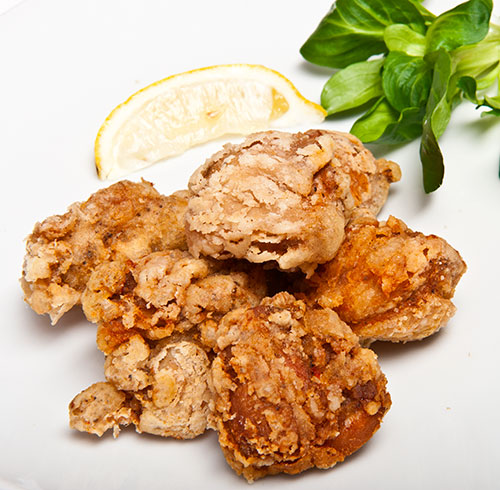
A gluten and soy-free version of a classic fried chicken recipe, that's just as tasty as the original.
Filed under:
japanese chicken favorites bento gluten-free washoku chuuka soy-free variation
Submitted by maki on 7 October, 2013 - 16:40
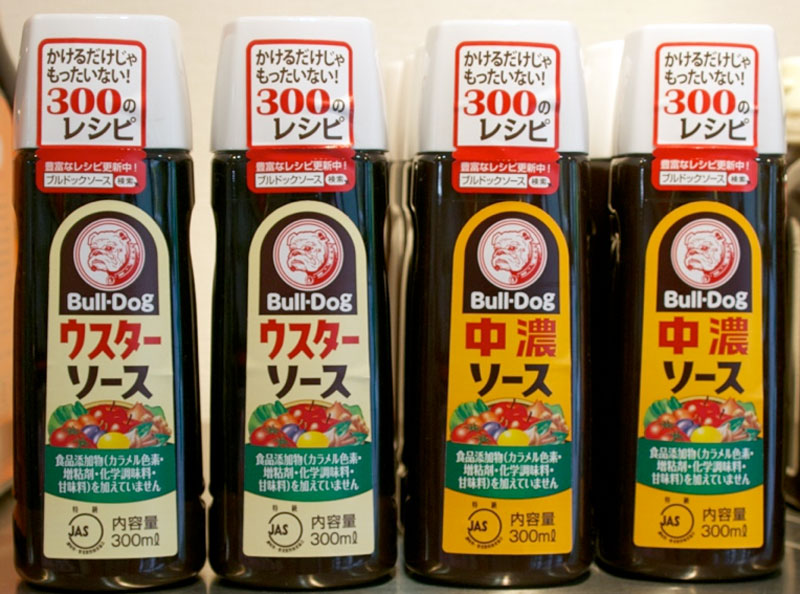
Miso, soy sauce, bonito flakes...these are the kinds of ingredients you'd expect to be used in Japanese recipes. But there's another ingredient that appears very often, and it's usually just called "sauce" or so-su (ソース). What is this "sauce" anyway?
Type:
feature Filed under:
japanese ingredients yohshoku
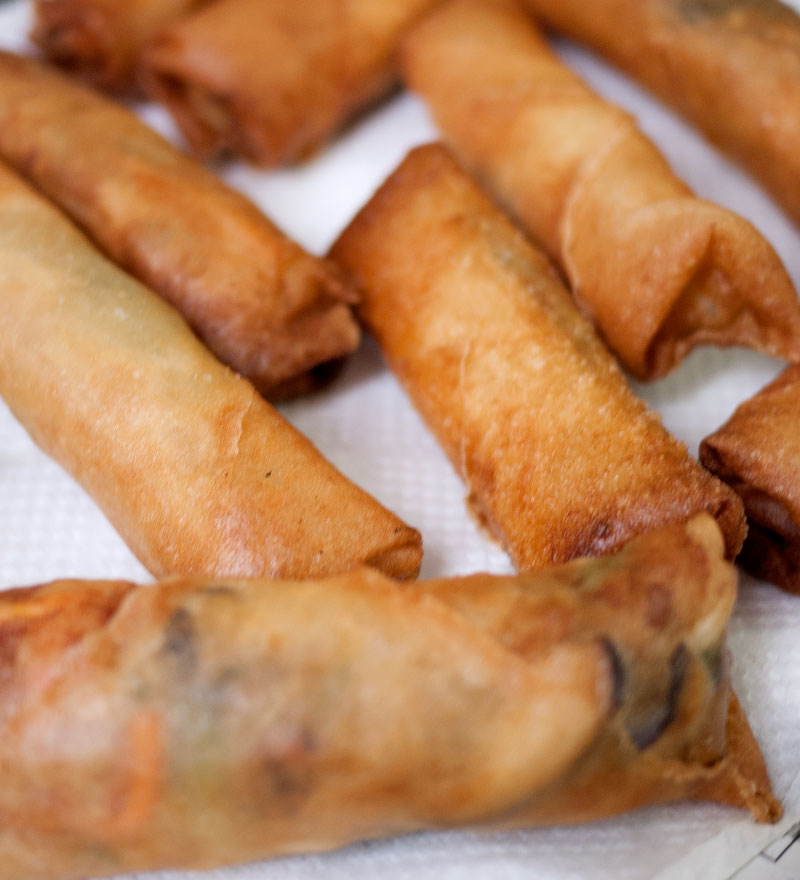
This recipe for spring rolls, or harumaki (春巻き) as they are called in Japanese, may not be authentic - or at least, not authentically Chinese. It's authentically Japanese-Chinese, or chuuka - Chinese dishes that were introduced to Japan mostly in the late 19th-20th centuries by Chinese immigrants (many of whom decided to stay), that have been adopted and adapted to Japanese tastes. Chuuka is not as heavily adapted as yoshoku (western style Japanese dishes), but they do differ in varying ways from the originals. These are the spring rolls I grew up with, the way my mother made them. (As I've stated here before, I don't really feel capable of covering the entire spectrum of 'Asian' cooking, so in that category I mainly stick to the Japanese, Japanese-Western (yoshoku), Japanese-Chinese (chuuka) dishes I know.)
Filed under:
japanese chinese snacks favorite chuuka appetizers
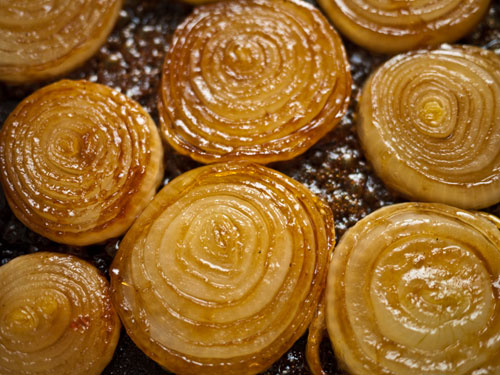
A simple thing, delicious, and eyecatching recipe starring the humble yellow onion.
Filed under:
japanese vegetarian favorites vegan
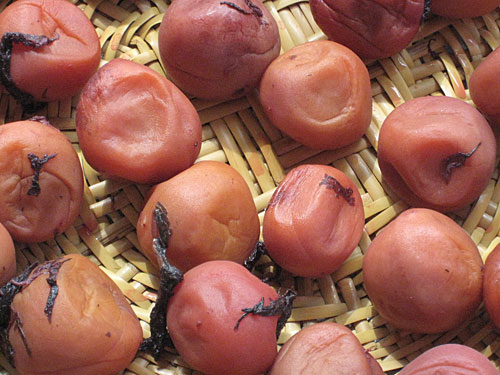
My mother came for a visit this week, bringing along a pot of her homemade umeboshi. I asked her to tell me how she makes them; not only did she write it down for me, she even had pictures she'd taken of her attempts in the past couple of years! So, here is my mom's version of how to make homemade umeboshi. I've freely translated her Japanese explanation to English.
My mother [my grandmother - maki] used to make umeboshi every year. When I lived in New York, I was too busy working to do much cooking, let alone umeboshi! But now that I am retired, I'm trying to remember how to do things the old way. Homemade umeboshi is so much more delicious than store bought, so they are worth the effort.
Filed under:
fruit japanese preserves and pickles tsukemono mom's recipes
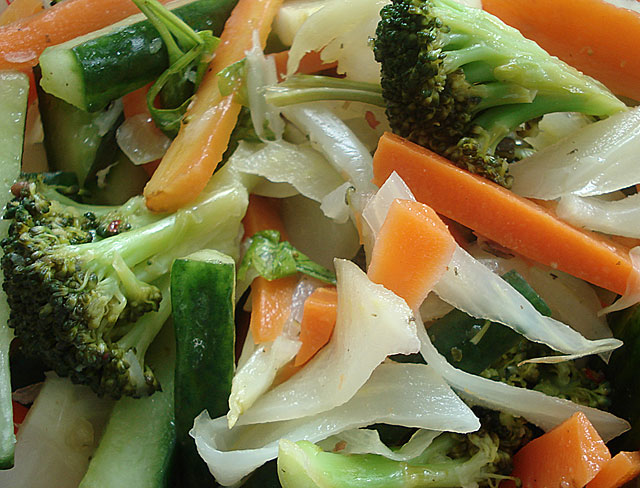
A mixed-vegetable marinade or refrigerator pickles with lemon juice and honey.
Filed under:
japanese lighter vegetables vegetarian vegan salad tsukemono
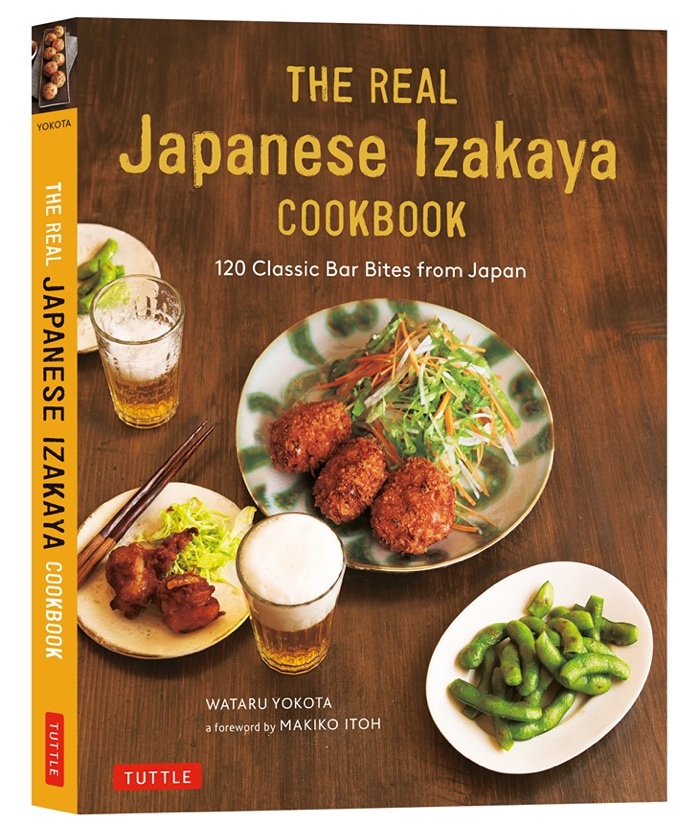
I have been translating a lot of Japanese books lately, such as the Asian Salads and Asian Noodles ones I mentioned previously. This is the latest one to come out, called The Real Japanese Izakaya Cookbook, by Wataru Yokota (Tuttle Publishing). I didn't just translate it; I also wrote the introduction (which is why my name is on the cover), as well the detailed explanations of all the Japanese ingredients that readers may not be familiar with.
Filed under:
cookbooks japanese izakaya translations
Sexy Wavy Japanese Sesame Cucumbers
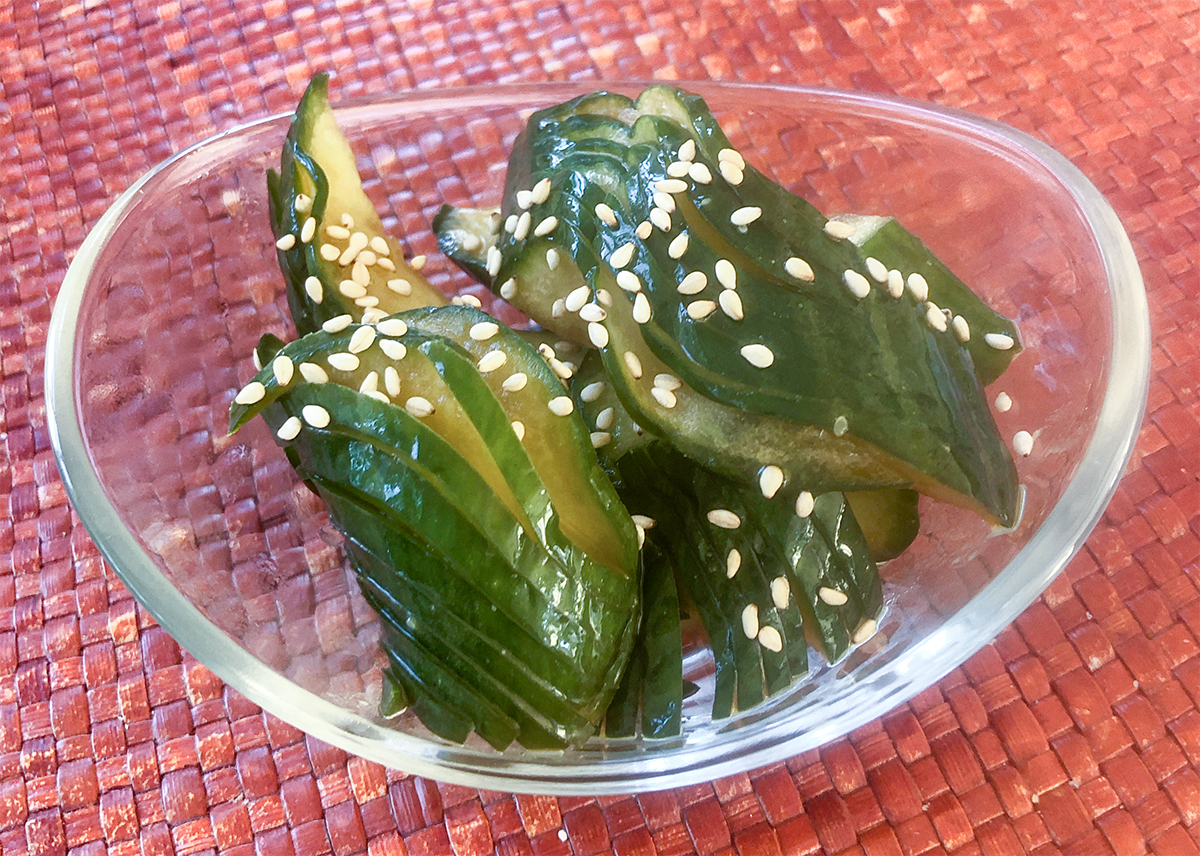
This is a really quick and simple cucumber recipe. Serve it as a side dish with any Japanese or other East Asian meal, or even as a salad. See the instructions for how to achieve the twisty, wavy look, even with large cucumbers.
Chilled grilled eggplant soup for a hot summer's day
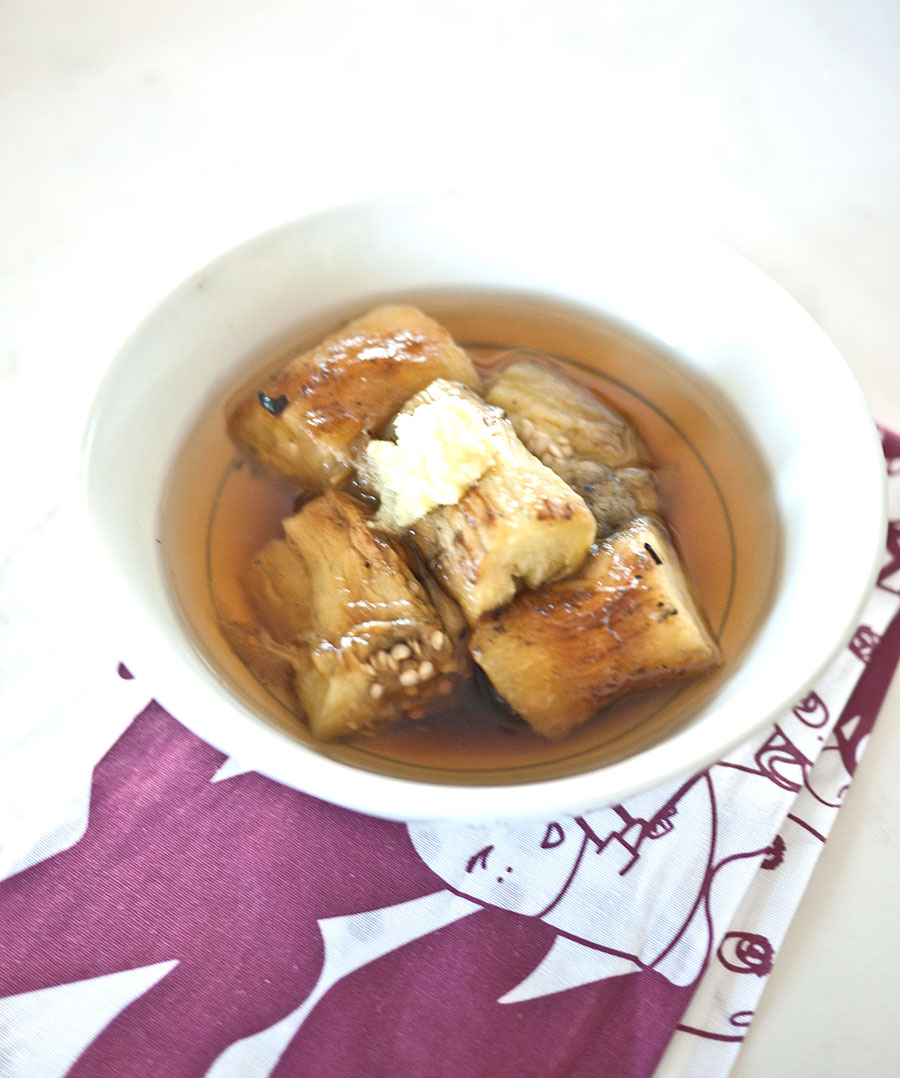
A refreshing chilled summertime soup using eggplants or aubergines and fresh ginger.
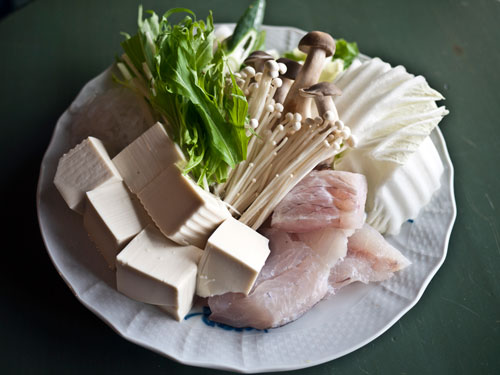
This month's Japan Times column is about the basics of nabe, or hot pots that are usually cooked at the table, with everyone taking what they like from the pot as it cooks.
Filed under:
japanese washoku nabe writing elsewhere japantimes
Pages

 Welcome to Just Hungry, where we serve authentic Japanese recipes and more! I'm