ingredients
About Japanese ingredients and substitutions
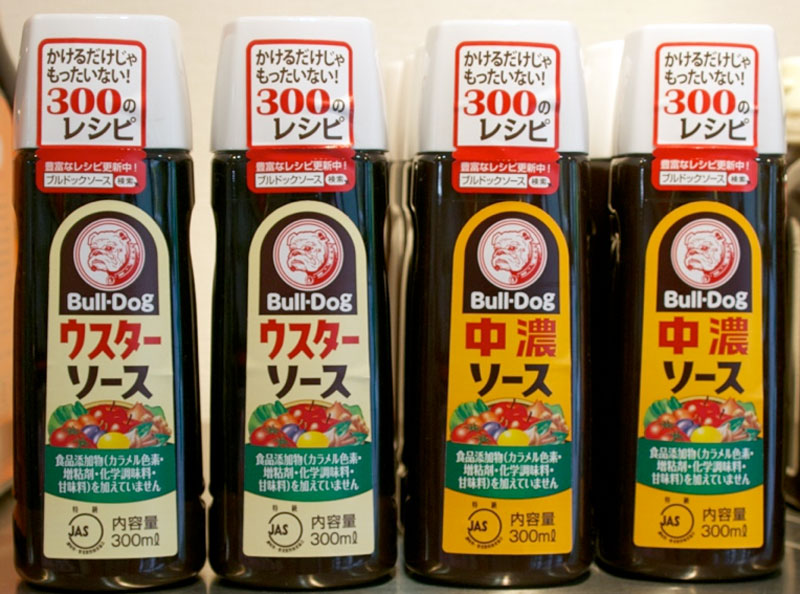
I haven’t exactly counted it up, but of the thousands of comments left on Just Hungry, not to mention Just Bento, probably at least a quarter are questions about ingredients or ingredient substitutions. So I thought I might put down what my criteria are for what kind of ingredients I choose to feature in the recipes on either site, especially when it comes to Japanese recipes. continue reading...
Can I get a hold of it?
The role of alcohol, onion and ginger in Japanese meat dishes
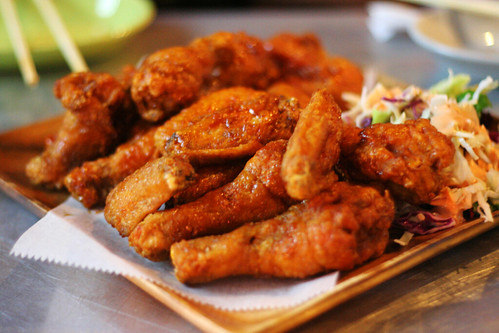
Periodically, someone asks a question about subsituting or leaving out sake or mirin from a dish (most recently to the chicken karaage recipe). This reminds me of how certain ways of thinking exist in Japanese and East Asian cooking, that may not necessarily exist in Western cooking. One of those is the perception of the flavor of meat. continue reading...
Cooking whole dried soybeans

Until fairly recently I had a blind spot when it came to the humble soybean. I regularly consume soy products like soy milk, tofu and okara, not to mention fermented soybean products like natto and tempeh. And green soybeans or edamame are always a great snack.
But for some reason, I didn’t really get into eating the whole dried (and cooked) soybean. It’s not that they are that much harder to cook than other dried beans either.
In any case, I’ve rectified that situation and now I cook up a batch of soybeans quite regularly and store them in the freezer. Plain boiled soybeans are amazingly delicious, and just packed with nutrition. The cooking liquid is so rich that it can be used as a very nutritious stock or dashi for making soups and such.
There are a couple of points to watch out for when cooking whole soybeans, which are noted below in copious detail. continue reading...
Time-tested vegan proteins
More and more these days I’m getting requests for vegan and vegetarian recipes. While I’m not a vegetarian as I’ve stated here before, I like to eat a daily menu that’s light on meat, and am always interested in vegan and vegetarian protein options.
There are several what I’d call factory-manufactured vegan protein products out there, from TVP to quorn. I’m sure they are safe and wholesome to eat, but I’m more interested in traditional, or time-tested, vegan/vegetarian protein alternatives.
This is the list I’ve come up with so far. They are Japanese-centric, since that’s what I’m most familiar with. Do you have any others to add? continue reading...
Fu, the mother of seitan

Vegetarians are probably familiar with seitan as a meat substitute. Seitan is wheat gluten that has been kneaded in such a way that the gluten threads align themselves to resemble meat. It was invented by advocates of the macrobiotic food movement in Japan, specifically as a meat substitute, in the 1960s. (Wikipedia entry.)
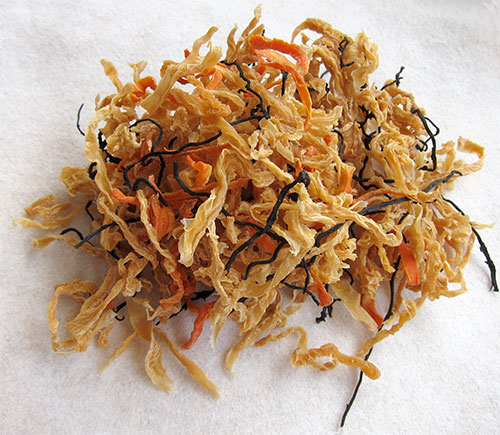
But way before there was a macrobiotic movement, let alone seitan, people in Japan were already eating a wheat protein product called fu (麩). Like seitan, fu is made from the gluten that is extracted from wheat flour. Sometimes the gluten is mixed with other ingredients. There are two kinds of fu: raw (namafu 生麩), which is basically fresh fu; and grilled and dried (yakifu or yakibu 焼き麩). Here I’d like to focus on the dried kind which is much easier to get a hold of for people outside of Japan. It’s also a great pantry item, since it keeps for a long time. continue reading...
Zakkokumai: Rice with seeds and grains and bits
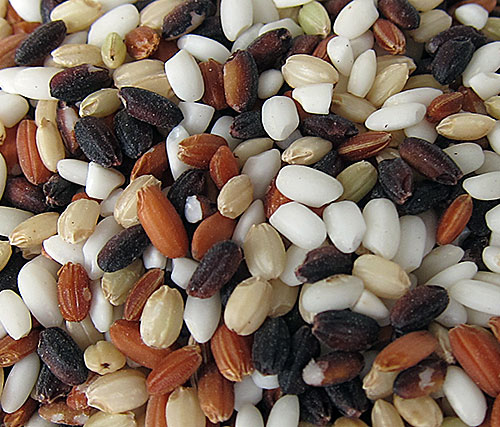
[Update:] There seems to be some confusion about how zakkokumai is cooked and looks like, so I’ve added some more photos and such.

Rice is such an integral part of a Japanese meal, that the word for ‘meal’ (gohan, ご飯) also means rice. White rice is the norm, both for taste and for various cultural reasons. But as you probably know, white rice (hakumai, 白米) is rice that has been stripped of most of its nutrients, leaving just the starch.
Brown rice (genmai) is the obvious healthier alternative. But brown rice can take some time to cook, what with the soaking and so on that’s needed, and some people simply don’t like the taste or texture.
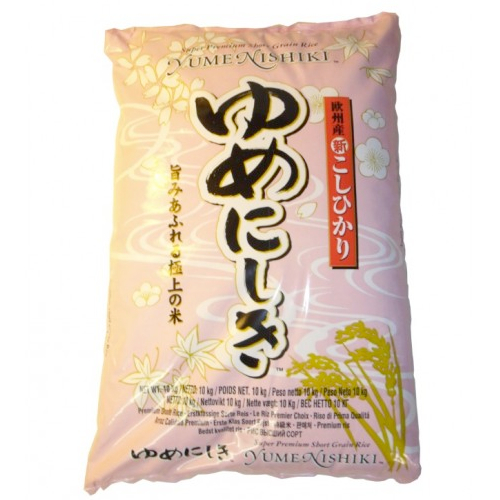
In recent years, something called zakkoku-mai (雑穀米)has become increasingly popular in Japan. Zakkoku just means “mixed grains”, and mai is rice. Another name for essentially the same thing is kokumotsu gohan (穀物ご飯). continue reading...
Japanese grocery stores in Germany
General notes on Germany: The biggest Japanese expat community is in the Düsseldorf area. continue reading...
Japanese grocery stores in France
Japanese grocery stores and Asian stores that carry Japanese products in France. continue reading...
Japanese grocery stores in the UK and Ireland
Listings for the UK and Ireland. continue reading...
Japanese grocery stores in the New York - New Jersey - Connecticut area
This page lists stores in New York, North New Jersey and Connecticut - the NYC Tristate area, plus upstate New York. South NJ area stores are listed on the main page.
(some formatting problems remain - please ignore)
Family Market 29-15 Broadway, Astoria Tel: 718-956-7925 10:00am〜1:00am (7 Days)
生鮮食品、一般食料品、雑貨、レンタルビデオ
JAS Mart 35 St. Marks Pl. (bet. 2nd & 3rd Aves.) Tel: 212-420-6370 11:00am〜11:00pm (Sun - Thu) continue reading...