spring
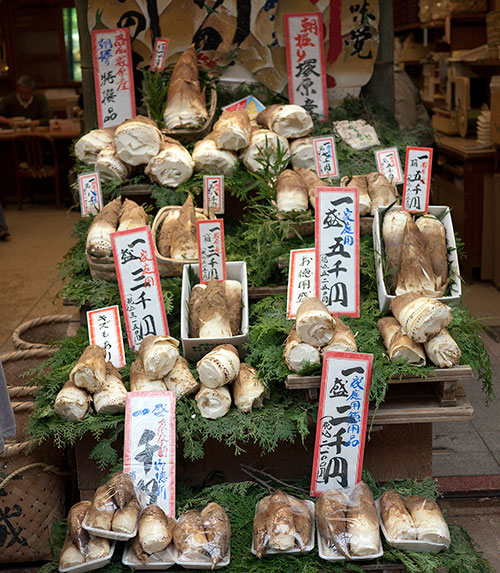
How to cook bamboo shoots (takenoko)

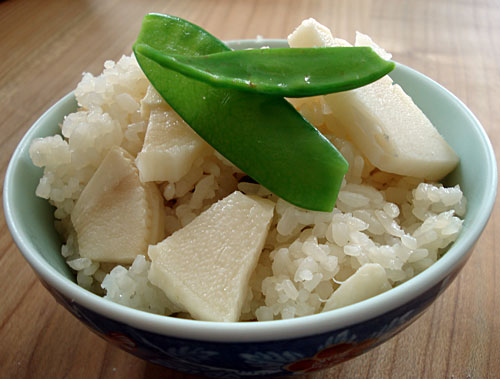
There are two Japanese vegetables that I can’t get fresh here that I miss very much. One is burdock root or gobo; the other is bamboo shoot or takenoko (竹の子 or 筍). Bamboo shoots are very much a spring-only vegetable, much like asparagus, so around this time of year I always get a craving for the crunch and subtle flavor. continue reading...
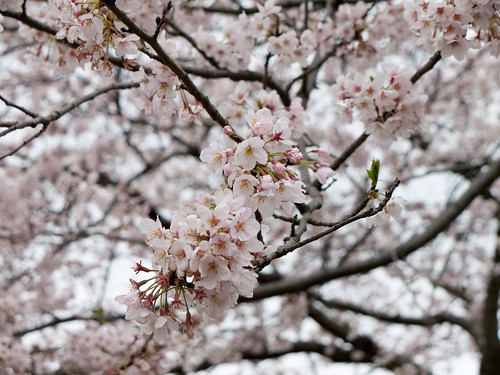
Of cherry blossoms, ohanami and Japanese culture
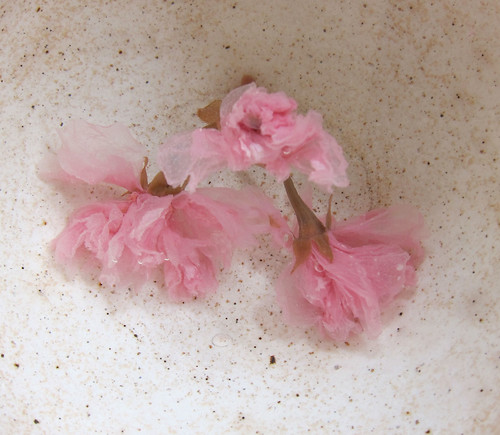
It may surprise you to read this, but I do not actually miss living in Japan that much generally, except for my family and the food. My home territory there is the greater Tokyo area, and while Tokyo is a great metropolis, it’s also unbearably congested and you are living on top of other people all the time. To borrow a term used for another place in the world, generally speaking it’s a nice place to visit, but I’m not sure (given a choice) that I’d want to live there. But there are certain times of the year when I do wish I were there, and right now is one of them. It’s cherry blossom time. continue reading...
Shell-shaped sushi (Hamaguri-zushi) for Girls' Festival
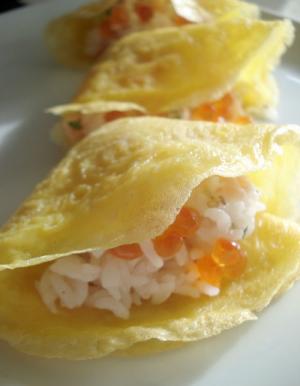
From the archives, originally posted March 2, 2007: I’ll be making these pretty egg-wrapped sushi again for hinamatsuri (Girl’s Festival) on Monday, March 3rd. The pale yellow and pink colors are like a harbinger of spring for me, besides being very girly. As delicate as they look, they are pretty easy to make. I have revised the recipe in minor ways. It’s a great way to use usuyaki tamago. Enjoy!
Tomorrow, March 3rd, is Momo no sekku or Peach Day in Japan. Peach blossoms usually start blooming around this time, signifying the coming of spring. It’s also the day for hina matsuri, the Doll Festival or Girls’ Festival. Households with daughters display hina ningyo-, traditional dolls that represent a princess’s wedding procession. This is because the ultimate happiness expected for a girl was for her to make a fruitful and comfortable marriage. Nowadays girls may be expected to do other things besides become happy wives, but on this day at least traditions still hold strong.
In Japan there is a long standing stereotype that girls and women like very sweet things, while manly men like less sweet and bitter things. So, for Hina Matsuri the guests are served sweet things like amazake (a very thick non-alcoholic hot drink made from the lees of sake, rather like eggnog in color and cloying sweetness), hishimochi (tri-colored mochi cake) and okoshi (colored sweetened puffed rice). Although there were three girls in our house, none of us liked amazake at all. However, my mother often made some kind of sushi for Hina Matsuri, which we really loved.
Here are two kinds of very pretty, girlie sushi in feminine pink, yellow and white with a touch of green. These colors fit the theme of Hina Matsuri perfectly: the traditional hishimochi is colored white, pink (or light red) and green.
The first is hamaguri-zushi or clam sushi, pictured here. It’s supposed to look like a clam, but to me it looks just as much like a little yellow flower. (Hamaguri are in season in March in Japan.) It can be filled with any kind of sushi rice, but here I have made a slightly pink-tinged sushi rice with lemony smoked salmon, mitsuba or flat-leaf parsley and white sesame seeds, wrapped in a usuyaki tamago or thin omelette. It’s related to chakin-zushi, where the omelette is wrapped in a bag shape and tied, but slightly less fiddly since all you have to do is fold it into quarters.
Besides making a very pretty spring party dish (for an appetizer maybe, or as part of a buffet), these work very well as bento items too since the sushi rice has good keeping qualities, and the omelette keeps the rice from drying out. Plus you can just grab them with your hands to eat.
The second sushi is smoked salmon temari zushi - the recipe is here. continue reading...
Rhubarb berry trifle
On rhubarb, stewed fruit and England
I first saw this curious plant called rhubarb during the time we lived for 5 years in Berkshire, England. I was 5 when we moved there. The rhubarb grew like a small jungle in a corner of the vegetable patch of the house we were renting, alongside some equally puzzling gooseberry bushes. Neither existed at all in Japan at the time, and my mother was at a loss as to what to do with them, until our next door neighbor lady told her how to stew them. The neighbor lady believed in stewing most fruit - she told my mother to stew or jam all of the raspberries too, since eating them raw may lead to upset small tummies. Thankfully my mother didn’t take her advice for all of the raspberries, and I still have memories of stickily enjoying bowls and bowls of red, ripe raspberries with clouds of whipped cream. One of the first things I did when I got my own garden was to plant several raspberry canes.
Stewed and cooked fruit figures quite prominently in my memories of English food at the time. This was in the ’70s. Whenever I was invited to tea at a friend’s house, there was usually always some sort of cooked fruit dish, be it a compote of peaches in the summer or apple and blackberry pie later on in the year. I think we only ate fresh, raw fruit at home, except for bananas and strawberries. I didn’t even know that gooseberries could be anything other than sour, green and only edible stewed with sugar, until I came to Switzerland and saw them left to ripen on a bush, turning a bright reddish-purple.
That penchant for cooking fruit does mean that there are many terrific fruity desserts (aka puddings) in British cookbooks. One of them is trifle. I’m in the midst of my annual rhubarb orgy period, and it’s one ‘fruit’ (though it’s botanically a vegetable) that needs to be cooked. Hence, the rhubarb trifle.
The slightly modernized trifle
A trifle is small pieces of sponge cake soaked in a sweet, fruity liquid, and topped with custard or cream. Some versions of trifle are quite alcoholic, but this one has no alcohol in it since I imagine my 8 year old self tucking into it. The components are simple: the fruit-liquidy mix, the cake, and the creamy topping. The key part that makes this trifle different is the rhubarb soaking liquid part, which is quite sour and not too sweet. I’ve added a few frozen berries (raspberries from last summer’s crop in fact) to make the red color more intense - if you have fresh strawberries by all means use those instead.
Trifle is traditionally topped with custard, cream or both. Here I have combined the two so to speak and topped it with vanilla ice cream instead - this is the slightly modernized part. It’s homemade but you can use a good store bought ice cream if you don’t want to bother, or don’t have an ice cream maker.
I think that the key to a good trifle is to not overload it with sponge cake, which makes it go rather stodgy. Add just a few pieces for the interesting texture. Note that I’ve used pieces of store bought roll cake here (called Swiss roll in England, but not really Swiss as far as I know) which adds some extra flavor. You can assemble it all in a big bowl, or in individual glasses as I’ve done here.
This is my pre-planned entry for Sam’s Fish and Quips event celebrating British food. See also my other two British-theme posts this week, Tasting Guinness Marmite and The Edwardians and their food. continue reading...
Rhubarb, ginger and berry smoothie to chase away a cold
I have a raging cold at the moment. Stuffed head, fever, ringing ears, streaming eyes, the lot. What makes it worse is that the weather is glorious outside, and here I am stuck inside, groaning a lot and feeling sorry for myself.
In times like this the only things I can even think about eating and drinking are fruity yogurt, juices, and tea. This smoothie, which is an adaptation from a recipe in the adorable Innocent Smoothie Recipe Book, combines two of those elements and is tart yet spicy in a nice chest-clearing sort of way. It also tastes wonderful. Although, I’m pretty sure it would taste even better if my mouth didn’t feel like cotton wool.
It’s a good thing I took this picture against the clear blue spring skies before the cold took over at full steam. continue reading...
Smoked salmon temari zushi: Ball-shaped sushi
Following up on the previous recipe for shell shaped sushi, here is another kind of sushi that’s great for parties. Temari are small cloth balls made from leftover scraps of kimono fabric, and temari zushi are meant to look like these colorful toys.
You can make temari zushi with any number of things, such as thinly sliced sashimi grade fish, boiled and butterflied shrimp, thinly sliced and cooked or uncooked vegetables, and even thin slices of cheese. You will likely never see temari zushi at a sushi restaurant - this is homey home-style sushi.
For these, I’ve used thinly cut slices of pale pink smoked salmon, with tiny amount of cream cheese inside, rather in the same vein as a New York Roll - quite non-traditional but it’s a great combination. The key is to make the temari zushi on the small side since they are quite rich. continue reading...
Baked Early Rhubarb

Here in the central part of Europe we have had a ton of snow over the past few days. In our corner of Switzerland we had about half a meter (about 19 inches) of the fluffy white stuff descend on us over the weekend.
In spite of that, there is a definite sign that spring is almost here: rhubarb is back in the stores! continue reading...
Strawberry, strawberry
This monster strawberry, that looks like - and was the size of - 3 regular strawberries all fused together, showed up in a batch bought some days ago, and since then I haven't been able to look at any strawberries at the store without a twinge of fear.
Rhubarb ginger muffins
As if last month's IMBB muffin (and cupcake) orgy weren't enough, here is another muffin that has definitely entered my must-make list. It's yet another way to enjoy the tanginess of rhubarb, with the added twist of preserved or crystallized ginger. (I used my precious homemade crystallized ginger, but you can use the store-bought kind with no problems.) continue reading...