vegetables
Corn on the cob with butter and soy sauce

I have to admit that I’ve been quite taken aback by how popular the new potatoes with butter and soy sauce recipe has been. Butter and soy sauce are so familiar to me as a tasty combination that I hadn’t quite realized that it would be new and exciting to a lot of people.
Anyway, here’s another extremely simple yet delicious way of using this magic combination on another summer vegetable - sweet corn. Here in Europe, eating corn on the cob is a relatively new custom imported from the U.S. - corn around here is either dried and ground up (as polenta and so on), or used as animal feed. So it’s not always possible to buy great, very fresh sweet corn. This treatment can perk up even an ordinary supermarket-bought corn on the cob, and will really shine with corn that you’ve just picked from your own garden. continue reading...
How to cook bamboo shoots (takenoko)

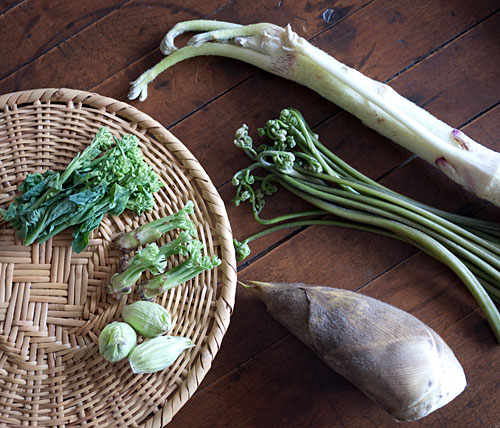
There are two Japanese vegetables that I can’t get fresh here that I miss very much. One is burdock root or gobo; the other is bamboo shoot or takenoko (竹の子 or 筍). Bamboo shoots are very much a spring-only vegetable, much like asparagus, so around this time of year I always get a craving for the crunch and subtle flavor. continue reading...
Different types of Japanese tsukemono pickles, and how some may not be worth the hassle to make yourself

Periodically, someone asks about Japanese pickles - those crunchy, salty, sweet-sour, even spicy bits of goodness that accompany a traditional meal, especially breakfast. There are a big variety of Japanese pickles, and sooner or later you might consider making them.
Some time ago I did a week-long series on making instant, or overnight pickles. These pickles can be made very quickly, usually with ingredients that are easy to get a hold of. If you want to try your hand at Japanese style pickles, I recommend starting there. There are also a couple of cookbooks in English dedicated to quick and easy pickles, both of which are quite good: Quick and Easy Tsukemono: Japanese Pickling Recipes by Ikuko Hisamatsu, and Easy Japanese Pickling in Five Minutes to One Day: 101 Full-Color Recipes for Authentic Tsukemono by Seiko Ogawa.
However, the type of pickles that you are likely to be served in a high class traditional inn in Japan, or even the type you can buy in vacuum sealed packs at a supermarket, are a bit more complicated to make, especially outside of Japan. Here are some examples. continue reading...
How to cook taro root or satoimo

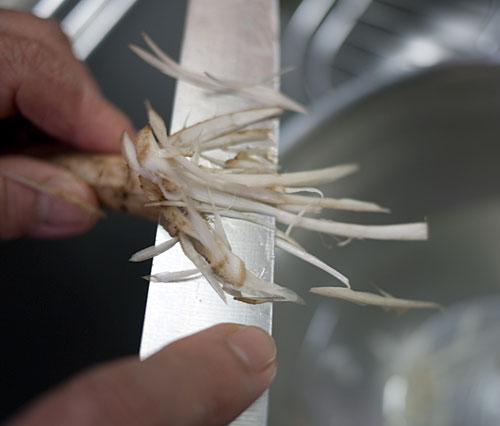
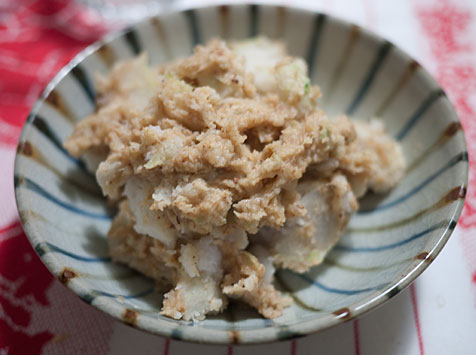
How to prepare that hairy looking beast, the taro root or satoimo. continue reading...
How to cook lotus root (renkon)

Lotus root (renkon in Japanese) is actually the rhizome of the lotus plant. It’s a popular vegetable throughout southern and eastern Asia, but it’s still not that well known in the west. Lotus root is full of fiber and various vitamins and other nutrients. In Asia it’s believed to have various medicinal qualities, but in macro-nutrient terms it’s best to think of it as a starchy vegetable, like potato. Visually of course, it’s very appealing with all those little holes. Here I’ll explain how it’s prepared and eaten in Japan. continue reading...
Lotus root mini-cakes with sweet chili sauce

These tasty little savory cakes are made of ground lotus root. The texture is quite surprising - almost like mochi cakes. It’s a great vegan, gluten-free savory snack that’s high in fiber and packed with flavor. continue reading...
2008 will be the International Year of the Potato
Next year, the United Nations wants us to celebrate the humble potato for an entire year. I’m not certain how the UN makes its decisions about such things (why not the Year of the Tomato or the Year of the Turnip?), but I have no objections against the humble potato, one of my favorite foods. Unless you are an avowed anti-carb person, how could you not love the potato? continue reading...
Deconstructed Tomato: Tomato gelée with tomato coulis

Have you ever made tomato water? It’s the clear liquid strained gently from a ripe tomato, and one of the best treats of summer. When made from juicy, vine-ripened tomatoes, it has a sweet yet green-tomatoey taste that is so intense that a little goes a very long way.
Making tomato water is very simple. All it requires is a blender or food processor, a fine mesh sieve, paper towels, and patience. What you do with the resulting water is up to your imagination. Here I have added a little gelatin to make it into a tomato gelée (or, to be non-fancy, jelly). Served on top is a tomato coulis made from the pulp that is left over after the water is strained. The only heat-adding cooking involved is in melting the gelatin. It fits in well with my minimal-cooking mood this summer.
This would make a very interesting first course for a summer meal, or an amuse-bouche if served in tiny portions. It would be a great in-between courses palate cleanser too, if you are having an elaborate meal. continue reading...
Zucchini and chickpea pancakes

Continuing with my light and quick summer dishes:
This year we got a bit more serious than usual about our garden, and planted three zucchini plants. If you have a garden with zucchinis, you know that sometime around midsummer they start to produce babies like crazy. We’ve had a rather cold and rainy summer here up until now, but this week our three innocent looking zucchini plants have gone into high gear, and we’re picking them as fast as we can before they turn into seedy, tasteless baseball bat sized monsters.
Zucchini pancakes are one way to use up a lot at once. This version uses chickpea flour instead of wheat flour or eggs, with a little bit of spice in it. It’s great hot or cold, and is a perfect snack, side dish or complete vegan main dish, since the chickpea flour is such a terrific source of protein and carbs (nutritional info). Serve it with a salsa, curry, or just on its own. Here I just served them with some super-ripe tomato wedges. The shredded zucchini adds moisture and a rather creamy texture, which I love.
Chickpea flour is used in Mediterranean and Indian cooking. I get mine from a local Indian grocery store, where it’s sold as gram flour; it’s also known as besan, ceci flour, and so on. continue reading...
Nature has the best recipe

At the moment, cherries are everywhere here in Switzerland. Roadside signs proclaim “Kirschen” or “Chriesli” (the Swiss-German dialect for cherries), luring you to farms and fruit groves and farm stores. They’re on sale at the Migros supermarket too, for the busy person to pick up in a hurry.
When I get started on cherries, I can’t seem to stop until I’ve had my fill, and I do mean fill, of that sweet, dark juice with a hint of sourness. Fresh cherries are so good that I just can’t bring myself to do anything more than pop them in my mouth one after another, methodically spitting out the pits. I know there are numerous cherry recipes out there, but as delicious as things like cherry pie and cherry clafouti are, there’s really nothing to beat the naked, unadorned cherry. continue reading...