vegetarian

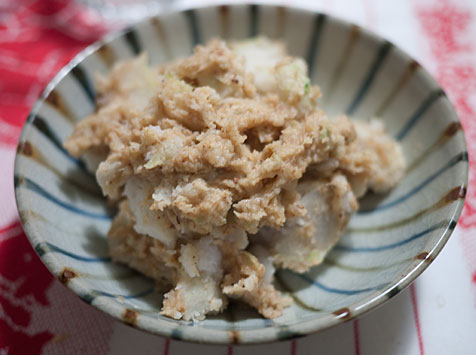
Goma dofu: Sesame tofu that's not tofu

goma_dofu.jpg

There are some dishes in Japan that look and have a texture like tofu, but are not tofu in the traditional sense; that is, they’re not made from coagulated soy milk. One of these not-tofu tofus is goma dofu (ごま豆腐)or sesame tofu. Goma dofu is made from three simple ingredients: ground sesame paste, water, and kuzu or kudzu powder. continue reading...

filed under

Quick take: Yogurt (yoghurt) cheese with garlic and olive oil

yogurtcheeseoliveoil.jpg

Hugh Fearnley-Whittingstall has an article about how to make yogurt (or as they spell it in the UK, yoghurt) in the Guardian. I did not want to go to the trouble of making yogurt from scratch, but I had a big pot of plain yogurt that needed to be used up so I made a sort of variation on the yogurt cheese balls further down on the page.

Yogurt cheese, in case you are unfamiliar with it, is just plain yogurt that has been drained of much of its liquid. To make it, just line a sieve with some porous cloth like cheesecloth, muslin, a coffee filter or even a couple of paper towels, spoon the yogurt in, and put the sieve with a bowl underneath in the refrigerator for at least a few hours. The more you let it sit, the drier it will become.

I strained about 2 1/2 cups of yogurt mixed with 1 teaspoon of sea salt from Friday evening to Sunday morning, by which time it had become the consistency of whipped cream cheese. I put this into a bowl, grated one garlic clove over it and drizzled on some extra virgin olive oil and mixed it up. It was the perfect spread for freshly baked hot savory scones.

I’ve never been a big fan of very sweet yogurt, so this savory yogurt spread may make more breakfast appearances.

filed under

A vegan version of nikujaga (Japanese meat and potatoes), plus how to remake Japanese recipes to make them vegan

jagaimomaple1.jpg

Nikujaga, stewed potatoes with meat, is a staple of Japanese home cooking. It’s filling and comforting, and appears quite frequently for dinner at our house. Recently though I’ve been making this vegan version more frequently, which is just as tasty as the meaty version. Thick fried tofu (atsuage) is the protein replacement, but it’s not just there for it’s nutritional benefits - I love the texture in a lot of dishes.

The recipe, plus some ideas on how to reform Japanese non-vegan recipes to make them vegan, after the jump. continue reading...

filed under

Time-tested vegan proteins

More and more these days I’m getting requests for vegan and vegetarian recipes. While I’m not a vegetarian as I’ve stated here before, I like to eat a daily menu that’s light on meat, and am always interested in vegan and vegetarian protein options.

There are several what I’d call factory-manufactured vegan protein products out there, from TVP to quorn. I’m sure they are safe and wholesome to eat, but I’m more interested in traditional, or time-tested, vegan/vegetarian protein alternatives.

This is the list I’ve come up with so far. They are Japanese-centric, since that’s what I’m most familiar with. Do you have any others to add? continue reading...

filed under

Fu, the mother of seitan

yakifu1.jpg

Vegetarians are probably familiar with seitan as a meat substitute. Seitan is wheat gluten that has been kneaded in such a way that the gluten threads align themselves to resemble meat. It was invented by advocates of the macrobiotic food movement in Japan, specifically as a meat substitute, in the 1960s. (Wikipedia entry.)

But way before there was a macrobiotic movement, let alone seitan, people in Japan were already eating a wheat protein product called fu (麩). Like seitan, fu is made from the gluten that is extracted from wheat flour. Sometimes the gluten is mixed with other ingredients. There are two kinds of fu: raw (namafu 生麩), which is basically fresh fu; and grilled and dried (yakifu or yakibu 焼き麩). Here I’d like to focus on the dried kind which is much easier to get a hold of for people outside of Japan. It’s also a great pantry item, since it keeps for a long time. continue reading...

filed under

Lotus root mini-cakes with sweet chili sauce

lotus_root_cakes500.jpg

These tasty little savory cakes are made of ground lotus root. The texture is quite surprising - almost like mochi cakes. It’s a great vegan, gluten-free savory snack that’s high in fiber and packed with flavor. continue reading...

filed under

Some unresolved thoughts about white bean paste

beanpaste.jpg

Usually when I put a recipe up here, it’s something that’s been fully resolved: that is, I’ve tried it out for myself (in most cases several times over), and I know that it works. This one is a bit different, but I thought I’d write about it in-progress, as it were, anyway. continue reading...

filed under

Sweet and spicy roasted kabocha squash

kabocha_roasted1.jpg

I hesitated to put this recipe up, because it’s not the prettiest thing in the world. But it’s so tasty, dead easy to make, and of this season - so, here it is. As a bonus it’s full of fibre and is relatively low-calorie, low-sugar etc for people who want a bit of something sweet without going on a massive guilt trip.

Most recipes out there for using winter squash seem to involve pureeing them, but I rather like them when they are in chunks or slices. This roasted squash has a sweet, spicy and salty glaze of sorts on them, which brings out the dense sweetness of the fruit. Cut into fairly thin slices like this, it makes interesting finger food. You can vary the sugar and spice to your taste, though too much of either may overwhelm it.

You do need to use kabocha-type squash for this ideally, though butternut should work too. You will need a dense, starchy and sweet squash. Don’t use regular pumpkin, which is too watery and lacks sweetness. (Rouge d’etampes pumpkin may work, but I’ve found their sweetness to vary quite a bit.) continue reading...

filed under

Preserving shiso, basil, lemon verbena, and other herbs

shisoleaves300.jpg

Around here it’s already cool enough to declare that summer is over and fall is here. (Actually we had a very cold, wet summer anyway, but nevertheless.) So the summer vegetable plants in my garden are dying off, and I’m in the process of salvaging the remaining tomatoes and eggplants, picking the last zucchini, and eyeing the winter squash to see when they will be ready.

Tender herbs like basil are on their last legs, so I’m picking and preserving those flavors of summer so that they can brighten the dark winter months. Last year I took the lazy option and froze everything, packing the picked leaves in plastic bags and throwing them in our big locker-type freezer. Freezing is okay if you’re too busy to do anything else with your herbs, but not really the optimal way all the time to keep tender herbs in the long run. So this year I’m thinking things through a bit more and considering how I want to use each herb, and preserving them accordingly. Each method is quite easy and really doesn’t take that much time. continue reading...

Lemon verbena and honey granita

lemon-verbena-granita1.jpg

The lemon verbena plant that I planted last year and almost lost to a summer storm, is now firmly established and positively thriving. Whenever I pass it I can’t resist rubbing a leaf, because it smells so wonderful.

Transferring that wonderful lemony scent to taste is quite easy - simply steeping it in some boiling water for about 10 to 15 minutes does the trick. This granita is infused with the aroma of lemon verbena, soured with a little lemon juice, and sweetened with a delicate acacia honey. Any light colored honey will work here instead. It makes a wonderful light dessert or palate cleanser, or cooling summer snack. continue reading...

filed under

Related sites

(I am on MySpace, Facebook, LinkedIn and things but I never use them....)

Food Destinations

food destinations button

Food Destinations is on hiatus, but it may return. More about Food Destinations...

Causes we support

wfp banner img
freerice234_60_Banner2.jpg

Hello!

Just Hungry is a site about Japanese food and home cooking, healthy eating, the expat food life, and more. [log in] or [register]

About this site

maki Just Hungry is a site about food. There are lots of recipes and much more. You may want to take the grand tour, read about Just Hungry, or contact the site owner, Makiko Itoh. To dive in real deep, try the site map.

Sharing!

  • tech-fav-1.gif
This article is from justhungry.com.