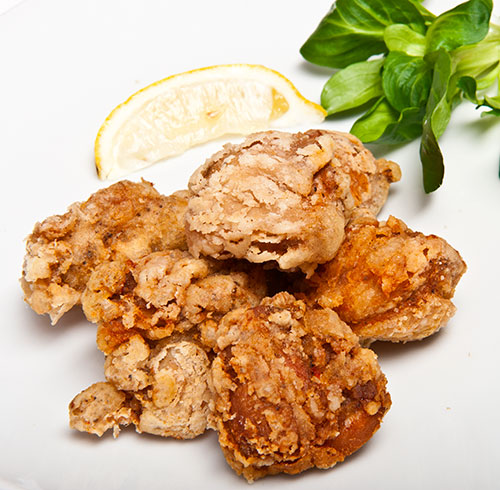
A gluten and soy-free version of a classic fried chicken recipe, that's just as tasty as the original.
Filed under:
japanese chicken favorites bento gluten-free washoku chuuka soy-free variation
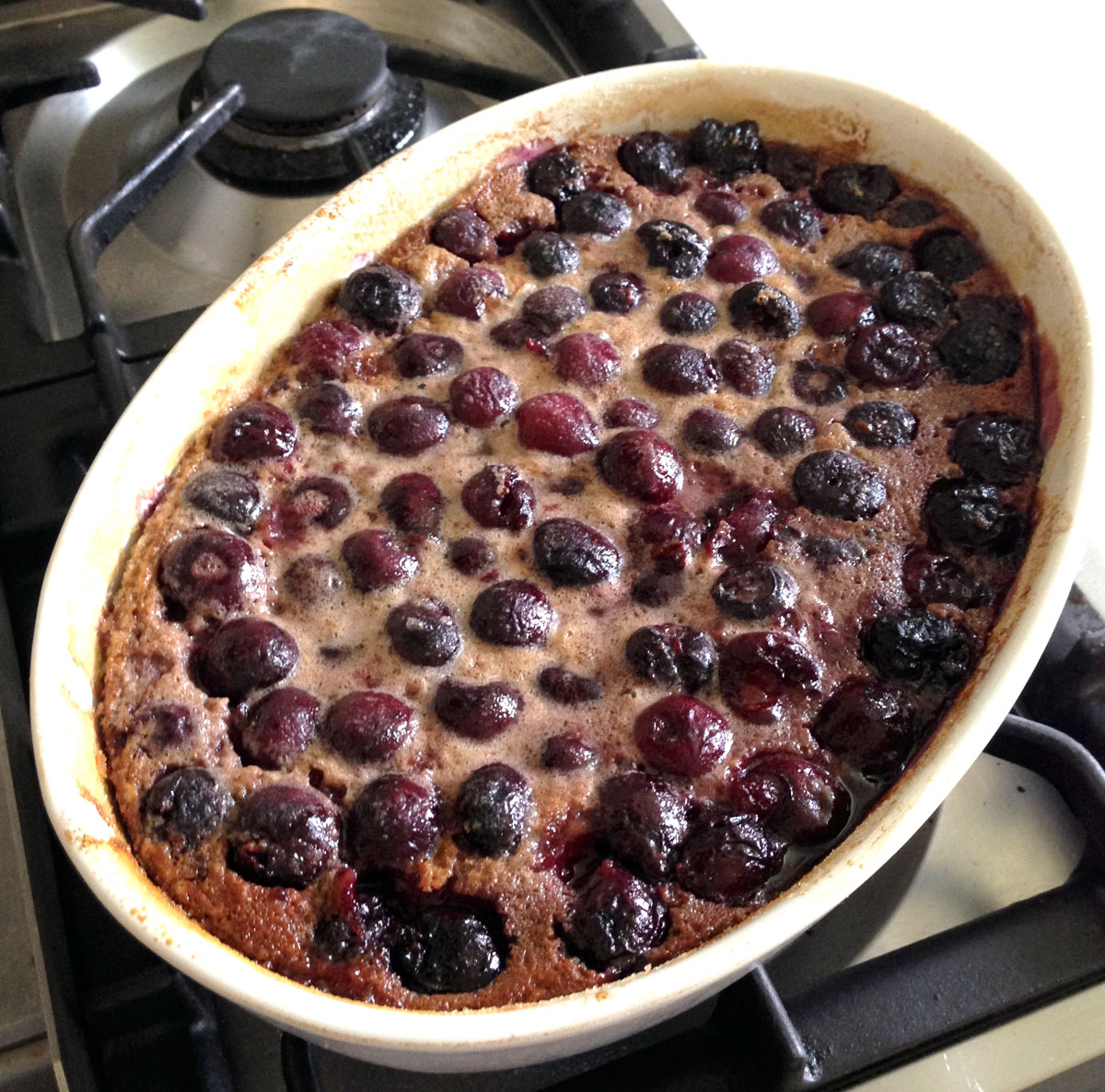
A recipe for a very simple, tender cherry clafoutis with browned butter. No nuts or other additions.
Filed under:
french desserts sweet fruit summer gluten-free

Attempting to turn cranky Maki into happy Maki through the power of fermentation. Plus a recipe for hummus with miso.
Filed under:
vegetarian vegan gluten-free health and weight loss
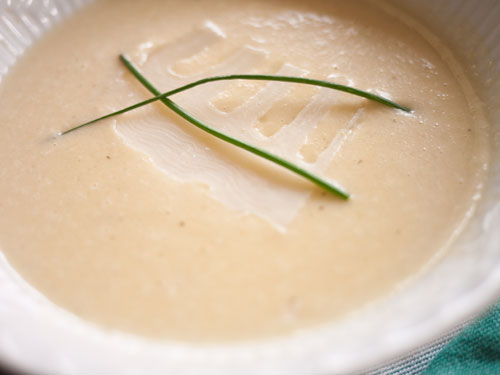
A very simple creamy soup, made with a quintessentially Japanese spring vegetable, bamboo shoot or takenoko.
Filed under:
japanese soup spring vegetarian yohshoku gluten-free

Recipes abound in print and online for Soupe au Pistou, a bean and vegetable soup that is a Provençal classic. Mine is not much different from the rest, but it's here because I love it so much. It reminds me of why I wanted to move here in the first place. When a pot of Soupe au Pistou is simmering away on our crappy hotplate (yes, it can be made on a hotplate) it makes my continuing kitchenless state somewhat tolerable. A big bowl warms me up when the temperature drops to the single digits celsius, and the chill seeps into this old stone house from all the gaping gaps in the doorways and windows and walls.
I make it around this time of year with fresh, undried beans - coco blanc and coco rouge - that we can buy at the markets here. They are so gorgeous, before and after shelling. However, it's probably a lot easier for most people to get a hold of dry beans so the recipe calls for them. If you can get fresh beans, just use a tad more - 3 cups total - and skip the soaking and pre-cooking part.
For the first time on Just Hungry, I've included a Japanese version of the recipe too. This is mainly for my mom and aunt to read, but take a look if you are studying Japanese - or point your Japanese friends to it. It is not a translation of the English, but a version specifically for making this soup in Japan.
Filed under:
soup legumes fall vegetarian french provence favorites vegan gluten-free
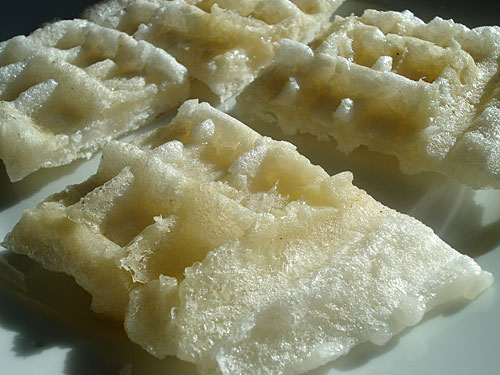
How to make moffles or mochi waffles, a relatively new but very popular snack in Japan, in a regular waffle maker.
Filed under:
japanese snack rice quickcook offbeat gluten-free mochi
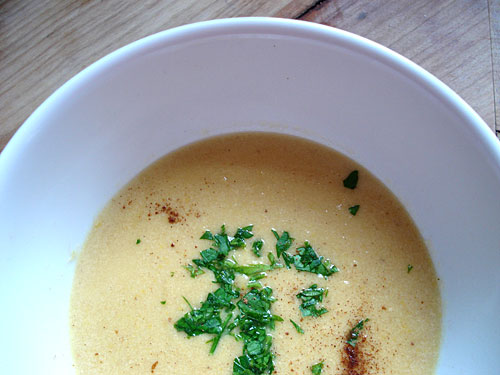
This rich fusion-esque soup is something I just came up with while fiddling around with the idea of a bisque-like soup without any cream or milk in it. It is fairly frugal despite its richness.
Filed under:
soup winter fish favorites gluten-free asian
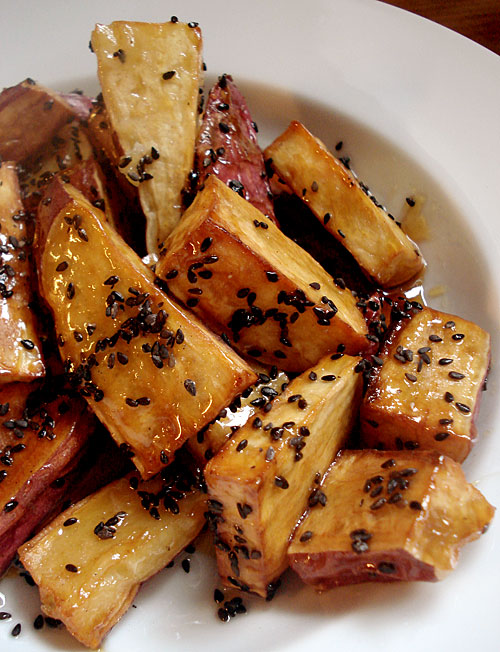
In the fall, many universities throughout Japan have big festivals called 大学祭 daigaku-sai, meaning university festival, or 文化祭 bunnkasai, Culture Festival. They are basically street fairs held on campus, with lots of food and fun stalls, concerts, even ghost houses and amusement rides. Many of the big ones also hold concerts in which top Japanese singers and bands appear. Daigaku Imo, which means University Potato, are candies sweet potatoes, a sweet and slightly savory snack that is often served at university festivals in Tokyo.
The snack itself probably originated as a cheap, calorie-rich, affordable snack sold to cash-poor students around universities in Tokyo around the turn of the 20th century. The idea for deep frying and then sugar coating potatoes most likely came from similar snacks in Chinese cuisine.
Daigaku imo is simple to make, yet a bit tricky. You ideally want to coat the sweet potato slices completely with a hard caramel sugar coating, but too often the sugar gets crystallized. It doesn't taste bad when it does, but it looks far better with a shiny, smooth coating. I've found the best way to accomplish this is to make a fresh batch of the sugar coating for each batch of potatoes cooked. This is not diet food by any means, but regardless, to me they are one of the main treats of fall.
Filed under:
dessert japanese fall vegan gluten-free party snack
[From the archives: Today (September 23rd) is the first day of the fall o-higan (お彼岸), when ohagi or botamochi are offered to ones ancestors, as well as oneself! My mother and my grandmother always made these at home around this time of year - I love their not-too-sweet stickiness. O-higan ends on the 26th, so if you like wagashi, why not give these a try? Originally published March 2007.]
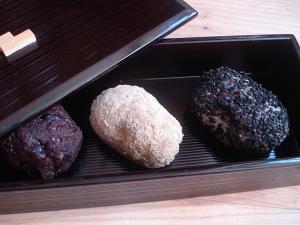 The seven days centered around the bi-annual days of the vernal equinox is a Buddhist festival period known as higan (or o-higan for the honorific term) in Japan. The fall (autumn) higan is aki no higan, and the spring higan is haru no higan. Since the day of the spring equinox is March 21, we're about to enter the haru no ohigan period.
During haru no higan, a sweet confection called botamochi is eaten. The mochi part means sticky, pounded rice, and the bota part comes from botan, or the tree peony. Botamochi is supposed to ressemble a tree peony flower.
During the autumn equinox (aki no higan or simply (o)higan)) period, a very similar confection called ohagi is eaten. This is supposed to look like a hagi or bush clover flower (Latin: Lespedeza thunbergii). Botamochi and o-hagi look the same to me, even though a hagi flower looks nothing like a tree peony flower, but the good old ancestors were probably a lot more imaginative than I am.
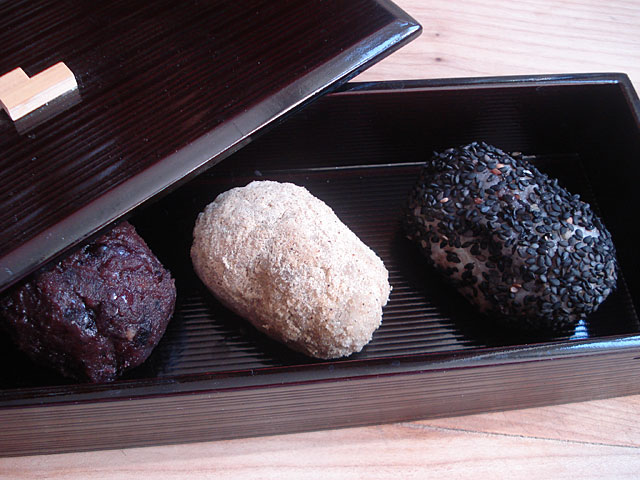
Botamochi and o-hagi are made of sticky rice and sweet tsubuan, 'chunky-style' sweet azuki bean paste. They are a bit fiddly to make but not difficult, especially if you use one of my favorite cooking helpers, plastic cling film. Since these are best eaten freshly made, it's well worth the effort to make them at home if you like bean-based Japanese sweets. You can adjust the amount of sugar in the tsubuan to your taste. Here I have made three variations: coated with black sesame seeds; coated with kinako (toasted soy bean powder); and the most traditional form with the rice cake wrapped in a layer of the tsubuan.
Filed under:
dessert japanese legumes rice vegetarian sweet vegan gluten-free wagashi
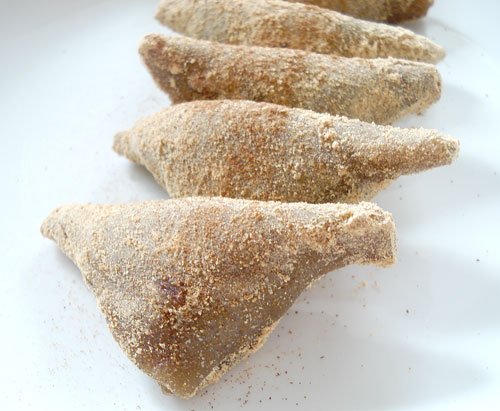
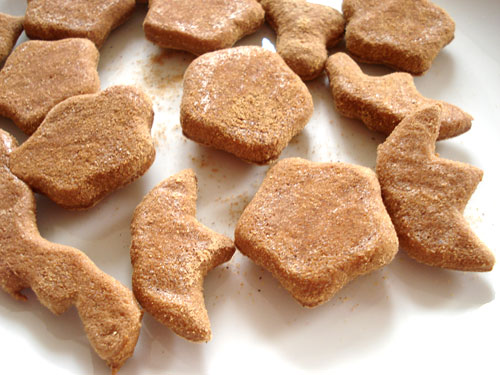
Just about anyone who takes a trip to the historical city of Kyoto goes home bearing a box of yatsuhashi (八つ橋), a small delicate sweet that is flavored with nikki or cinnamon. While I am not from Kyoto, I get a fit of nostalgia for yatsuhashi on occasion. Fortunately they aren't that hard to make at home. Added bonuses: they are more or less fat free, gluten-free, and vegan!
Filed under:
dessert japanese sweet tea vegan gluten-free wagashi
Pages

 Welcome to Just Hungry, where we serve authentic Japanese recipes and more! I'm Makiko (Maki). →