recipe

Basics: Cold soba noodles with dipping sauce

I’ve updated this very popular article a little bit and pushed it up from the archives, since it is the season for cold noodles now. I’ll also have a followup recipe soon for the perfect accompaniment to zaru soba. Originally published in May 2007.

soba1.sidebar.jpg

Most of Japan gets very hot and humid in the summer. To combat the heat, a number of dishes meant to be eaten cold have been developed. One of the main cold summer dishes is cold noodles.

Soba noodles, made of soba (buckwheat), are available all year round but are really popular when the heat turns unbearable. As with other cold noodles, they are prepared in a way that may seem strange if you’re used to pasta and other Western-style noodles. Unlike pasta, most Japanese noodles, including soba, are rinsed rather vigorously in cold running water. This not only cools them down but gets rid of excess starch, which adversely affects the flavor of the noodles. Many recipes written in English omit this critical rinsing step: you don’t just plunge it in cold water, as many directions incorrectly state, but you actively wash the noodles. Once you’ve done this once, you will definitely notice the difference. I’ve given detailed instructions for this procedure below.

Dipped into a properly made sauce or soba tsuyu, with plenty of spicy condiments or yakumi, there’s nothing more refreshing to eat on a hot summer evening. continue reading...

filed under

Homemade Umeshu (plum wine) and Ume Hachimitsu Sour (ume honey-vinegar drink)

michiko_umenotes.jpg

Since so many people liked my mom’s umeboshi recipe, here are two more recipes using ume plums from her. She doesn’t have photos for these, so I’ve taken a picture of her notes, with a little illustration she did of how to layer the ume and sugar for the umeshu (plum wine). continue reading...

Homemade Umeboshi (Japanese salty pickled plums)

umeboshi-5.jpg

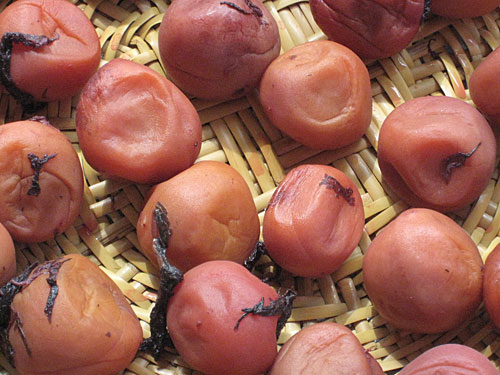
My mother came for a visit this week, bringing along a pot of her homemade umeboshi. I asked her to tell me how she makes them; not only did she write it down for me, she even had pictures she’d taken of her attempts in the past couple of years! So, here is my mom’s version of how to make homemade umeboshi. I’ve freely translated her Japanese explanation to English.

My mother [my grandmother - maki] used to make umeboshi every year. When I lived in New York, I was too busy working to do much cooking, let alone umeboshi! But now that I am retired, I’m trying to remember how to do things the old way. Homemade umeboshi is so much more delicious than store bought, so they are worth the effort. continue reading...

Konnyaku and shirataki FAQ: The almost zero-calorie, weird wobbly food from Japan

konnyaku1.jpg

From the archives. For some reason I've been getting several email questions about konnyaku recently, so here is my definitive (I hope) guide to preparing konnyaku and konnyaku noodles, or shirataki. Originally published in January 2007.

The quintessential Japanese foods that (may) help you lose weight, are konnyaku and shirataki. Both are made from the same substance, the corm of the konnyaku or konjac plant. Shirataki is also known as konnyaku noodles, to further confuse things, but I prefer the original name which means "white waterfall". It's basically konnyaku shaped like long thin noodles. continue reading...

filed under

Sweet onion and soba salad with fat-free umeboshi dressing

shintamasobasalad-sm.jpg

We still haven’t found a house to buy (though we may getting close), and due to the way things work in France, we are probably going to be nomads for at least 4 more months even if we put in an offer for a place tomorrow. I’ve gotten more used to cooking in tiny holiday home kitchens, but I’m still not up to anything too complicated - or in other words anything that requires the use of more than 2 burners at a time.

Fortunately it’s now summer, which means lighter, less complicated meals anyway. This salad, which can be a meal on its own, a starter or a light side dish, features sweet salad onions (spring is the season for them, at least around these parts), sliced paper-thin and refreshed in ice cold water. The tart dressing features umeboshi (pickled plums) and uses no oil, so this is an almost fat-free, fairly low calorie dish, that’s vegan to boot. continue reading...

filed under

Easter Bunny Cupcakes

image: Easter bunny cupcakes

It seems that quite a few people have been trying out the kasutera/castella recipe recently, and running into problems. Castella is not an easy cake. So, since it's Easter, I thought I'd haul this out of the archives attic. These little 'rich tea cakes' are much easier to make, and while they have an entirely different texture they are really quite delicious. I hope you'll give them a try! The fondant is not too hard if you can get a hold of the glycerin, but alternatively you could use store bought Easter themed cake decorations. Originally published in March 2005, as part of the late lamented Is My Blog Burning food blog event. continue reading...

filed under

Inarizushi (sushi in a bean bag) Redux: Cooking your own inarizushi skins

inarizushi1.jpg

Four years ago I posted a very basic recipe for inarizushi, homely sushi that is stuffed into a fried tofu skin or aburaage. It’s been one of the most popular articles here on Just Hungry ever since. That only gave instructions for stuffing pre-made (canned or vacuum packed) skins, so I thought I’d update it with instructions for making your own inarizushi skins from scratch. These instructions will be particularly useful to vegetarians and vegans, since most if not all premade skins are cooked in a fish-based traditional dashi stock. And, for all of you who have had problems making Eggs in Treasure Bags with those small, thin canned skins: You’ll find that making the eggs from your own, sturdy skins is so much easier. continue reading...

filed under

Shell-shaped sushi (Hamaguri-zushi) for Girls' Festival

From the archives, originally posted March 2, 2007. These delicately colored sushi are a great way to use usuyaki tamago. I know I’ve been re-posting things from the archives a lot lately, but I hope you’ll forgive me - I’m moving tomorrow! In any case, I hope you’ll give these delicate sushi a try, especially if you have daughters or granddaughters.

hamagurizushi1.sidebar.jpg

The 3rd of March is Momo no sekku or Peach Day in Japan. Peach blossoms usually start blooming around this time, signifying the coming of spring. It’s also the day for hina matsuri, the Doll Festival or Girls’ Festival. Households with daughters display hina ningyou-, traditional dolls that represent a princess’s wedding procession. This is because the ultimate happiness expected for a girl was for her to make a fruitful and comfortable marriage. Nowadays girls may be expected to do other things besides become happy wives, but on this day at least traditions still hold strong.

In Japan there is a long standing stereotype that girls and women like very sweet things, while manly men like less sweet and bitter things. So, for Hina Matsuri the guests are served sweet things like amazake (a very thick non-alcoholic hot drink made from the lees of sake, rather like eggnog in color and cloying sweetness), hishimochi (tri-colored mochi cake) and okoshi (colored sweetened puffed rice). Although there were three girls in our house, none of us liked amazake at all. However, my mother often made some kind of sushi for Hina Matsuri, which we really loved.

Here are two kinds of very pretty, girlie sushi in feminine pink, yellow and white with a touch of green. These colors fit the theme of Hina Matsuri perfectly: the traditional hishimochi is colored white, pink (or light red) and green. continue reading...

filed under

Japanese Basics: How to make Japanese-style plain rice and sushi rice

This is the first how-to and recipe that I posted on Just Hungry. Properly cooked rice is the foundation of a traditional Japanese meal, and you absolutely cannot skimp on the steps detailed here if you are aiming for anything approaching authenticity. I've edited the text to make some things clearer. Back to basics! Originally published in November 2003.

ricebowl_with_umeboshi.jpg

Rice is the staple of Japanese food, and making it just right can be rather difficult if you don't know how. If you think you will be preparing rice regularly, an electric rice cooker will make your life so much easier. You can cook non-Japanese style rice in it too, though I tend to make those in a regular pan. continue reading...

filed under

Related sites

wfp banner img
freerice234_60_Banner2.jpg

Hello!

Just Hungry is a site about Japanese food and home cooking, healthy eating, the expat food life, and more. [log in] or [register]

About this site

maki Just Hungry is a site about food. There are lots of recipes and much more. You may want to take the grand tour, read about Just Hungry, or contact the site owner, Makiko Itoh. To dive in real deep, try the site map.

Sharing!

  • tech-fav-1.gif
This article is from justhungry.com.