summer

Zucchini (Courgettes) braised in rosemary infused olive oil

braised_zucchini1_500.jpg

I have not doing a lot of serious cooking lately, at least not the kind that results in a useful blog post. Most of my cooking energies have been expended on another project, which is wearing me down a bit (more on that at a later time). What I have been cooking for actual meals is very simple food, that requires minimal kitchen time, though not necessarily quick to cook.

The subject of this article is zucchini (courgette) slices that are slowly braised in a fragrant oil. It requires perhaps 10 minutes of actual kitchen time, but an hour or more to complete. Days even, if you choose one option. You don’t need to hover over the pan for that time, but you do have to be nearby, to keep an eye on the hot oil, not to mention any errant pets, children or clumsy adults that wander in.

The wait and vigilance are worth it though. The zucchini slices, scented with the pine-mintiness of rosemary, become brown and sticky and almost caramelized on the surface, and soft and creamy on the inside. It’s great as an accompaniment to roast or panfried meats or fish, or as part of a vegetarian meal (try it with pasta). I could have it every day, just on its own, if it weren’t for the rather ruinous effect it has on my waistline, even if the oil is good-for-you olive oil.

This is the taste of late summer in Provence for me. continue reading...

filed under

The sweet, cultured taste of Calpis

calpis_main_sm.jpg

As your sometime guide to Japanese culinary culture, I would be remiss if I let another summer pass by without talking about Calpis.

Calpis is a sweetened fermented milk beverage. The label says:

“CALPIS” is a cultured milk drink, a refreshing gift from nature.

People tend to either love or hate Calpis. continue reading...

filed under

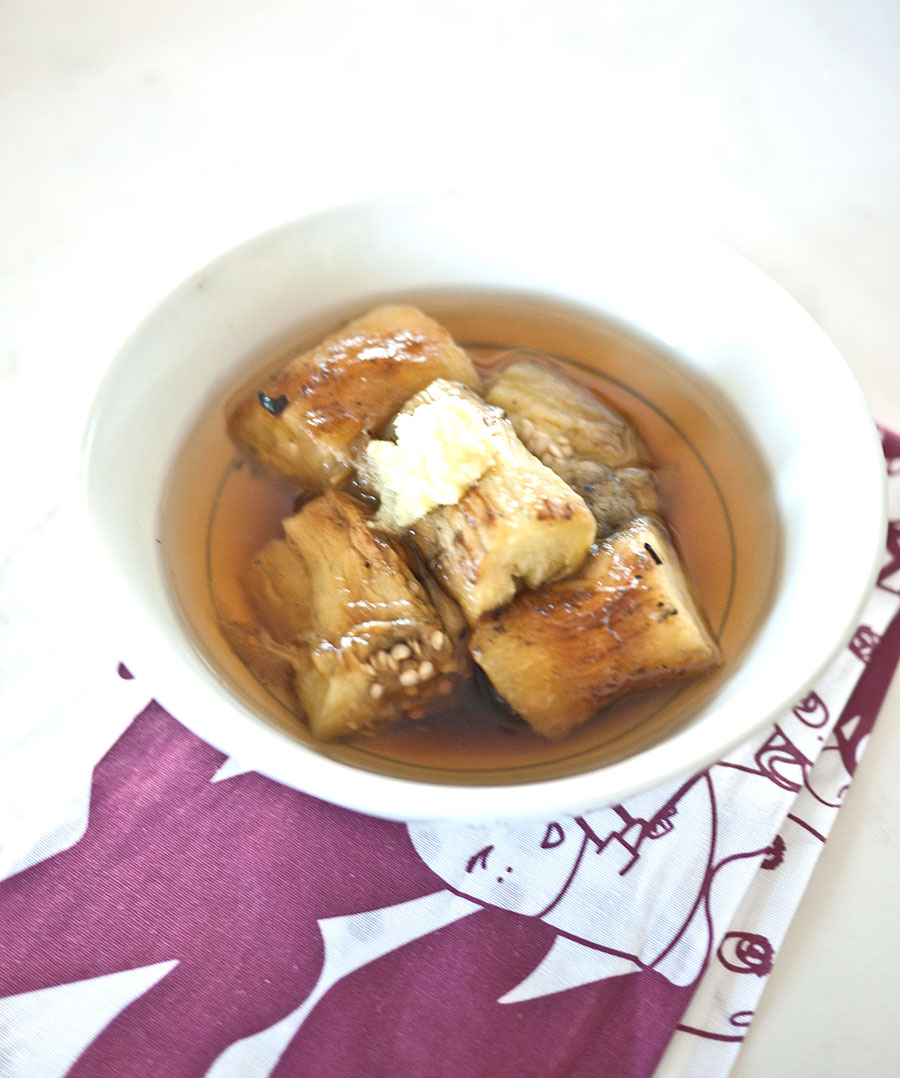
Nasu no miso dengaku: Japanese slow-roasted eggplant with dengaku sauce

nasu_misodengaku_500.jpg

It’s still summertime, but I can feel the cooler days of fall coming, especially in the evenings when the temperature is dropping just a bit more than it did a few weeks ago. This is one of the best times of the year for food lovers, especially if you love vegetables.

Eggplants (aubergines) are in high season now and will be around for at least another month or so. While you can get them year-round, they are at their best of course in their natural season.

This is a classic Japanese way of serving eggplant, and it’s really easy. All you do is to slowly roast the eggplant until tender, either in the oven or on the stovetop in a frying pan, then serve with a glossy, salty-sweet dengaku (田楽)sauce. I could eat this every day, with a bowl of plain rice and some cold mugicha to wash it down. continue reading...

filed under

Traditional Japanese strategies for combatting natsubate, or the dog days of summer

IMG: sleeping cat.

A cat of our acquaintance’s natsubate strategy: All-day naps in the shade.

August is particularly bad in the Tokyo area where I’m from, as it is in most parts of Japan except for the northern parts of Hokkaido. It gets really hot, and the high humidity makes everything and everyone moist, sticky and generally nasty. There’s a bit of relief in the form of a brief evening thunderstorm (夕立 ゆうだち yuudachi) most days, but the respite is temporary. Getting a decent night’s sleep without air conditioning is pretty much impossible.

The term to describe the stage of lethargy and fatigue brought on by this hot, humid weather is 夏バテ (なつばて natsubabe; literally ‘summer fatigue’). Japanese people have devised various ways of combatting it. Some are food related, and some aren’t, but here are some of my favorites. continue reading...

filed under

Postcards from Southwestern France: Gazpacho or cold soup, Cassoulet, Albi, Moissac, Conques

Conques, France

We left Provence this week for a little trip to the Midi-Pyrénées in the southwestern part of France. We’ve been trying to save money by cooking at home most of the time since we started our nomadic existence in France (see previously; not that that’s much of a hardship, since the produce and other foodstuffs in Provence are spectacular). But this week we’ve been staying in an apartment in a 17th century townhouse right around the corner from the Toulouse-Lautrec Museum in the heart of Albi, the capital of the Tarn Department. Since there are tons of great little restaurants here, we’ve been indulging ourselves a bit. continue reading...

filed under

Basics: Cold soba noodles with dipping sauce

I’ve updated this very popular article a little bit and pushed it up from the archives, since it is the season for cold noodles now. I’ll also have a followup recipe soon for the perfect accompaniment to zaru soba. Originally published in May 2007.

soba1.sidebar.jpg

Most of Japan gets very hot and humid in the summer. To combat the heat, a number of dishes meant to be eaten cold have been developed. One of the main cold summer dishes is cold noodles.

Soba noodles, made of soba (buckwheat), are available all year round but are really popular when the heat turns unbearable. As with other cold noodles, they are prepared in a way that may seem strange if you’re used to pasta and other Western-style noodles. Unlike pasta, most Japanese noodles, including soba, are rinsed rather vigorously in cold running water. This not only cools them down but gets rid of excess starch, which adversely affects the flavor of the noodles. Many recipes written in English omit this critical rinsing step: you don’t just plunge it in cold water, as many directions incorrectly state, but you actively wash the noodles. Once you’ve done this once, you will definitely notice the difference. I’ve given detailed instructions for this procedure below.

Dipped into a properly made sauce or soba tsuyu, with plenty of spicy condiments or yakumi, there’s nothing more refreshing to eat on a hot summer evening. continue reading...

filed under

Homemade Umeshu (plum wine) and Ume Hachimitsu Sour (ume honey-vinegar drink)

michiko_umenotes.jpg

Since so many people liked my mom’s umeboshi recipe, here are two more recipes using ume plums from her. She doesn’t have photos for these, so I’ve taken a picture of her notes, with a little illustration she did of how to layer the ume and sugar for the umeshu (plum wine). continue reading...

Sweet onion and soba salad with fat-free umeboshi dressing

shintamasobasalad-sm.jpg

We still haven’t found a house to buy (though we may getting close), and due to the way things work in France, we are probably going to be nomads for at least 4 more months even if we put in an offer for a place tomorrow. I’ve gotten more used to cooking in tiny holiday home kitchens, but I’m still not up to anything too complicated - or in other words anything that requires the use of more than 2 burners at a time.

Fortunately it’s now summer, which means lighter, less complicated meals anyway. This salad, which can be a meal on its own, a starter or a light side dish, features sweet salad onions (spring is the season for them, at least around these parts), sliced paper-thin and refreshed in ice cold water. The tart dressing features umeboshi (pickled plums) and uses no oil, so this is an almost fat-free, fairly low calorie dish, that’s vegan to boot. continue reading...

filed under

Corn on the cob with butter and soy sauce

corn-bataashoyu1.jpg

I have to admit that I’ve been quite taken aback by how popular the new potatoes with butter and soy sauce recipe has been. Butter and soy sauce are so familiar to me as a tasty combination that I hadn’t quite realized that it would be new and exciting to a lot of people.

Anyway, here’s another extremely simple yet delicious way of using this magic combination on another summer vegetable - sweet corn. Here in Europe, eating corn on the cob is a relatively new custom imported from the U.S. - corn around here is either dried and ground up (as polenta and so on), or used as animal feed. So it’s not always possible to buy great, very fresh sweet corn. This treatment can perk up even an ordinary supermarket-bought corn on the cob, and will really shine with corn that you’ve just picked from your own garden. continue reading...

filed under

Related sites

wfp banner img
freerice234_60_Banner2.jpg

Hello!

Just Hungry is a site about Japanese food and home cooking, healthy eating, the expat food life, and more. [log in] or [register]

About this site

maki Just Hungry is a site about food. There are lots of recipes and much more. You may want to take the grand tour, read about Just Hungry, or contact the site owner, Makiko Itoh. To dive in real deep, try the site map.

Sharing!

  • tech-fav-1.gif
This article is from justhungry.com.