basics
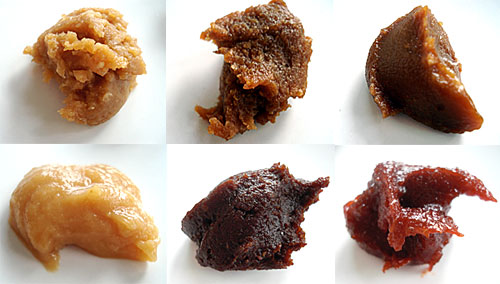
Miso Basics: A Japanese miso primer, looking at different types of miso

[From the archives. This miso primer was published here last September (2008). I’ve added some notes about miso-based blends, especially sumiso or miso with vinegar.]
This is a post that has been a long time coming. I kept on holding it off until I had a good variety of miso on hand to show photos of. I can’t say I have a comprehensive selection to show you, but I hope you will find this article useful anyway.
Miso (味噌、みそ), as you probably know already, is a naturally fermented paste made by combining cooked soy beans, salt, and often some other ingredient such as white or brown rice, barley, and so on. The texture can range from smooth to chunky, and the color from a light yellow-brown to reddish brown to dark chocolate brown, and the flavor ranges from mildly salty and sweet to strong and very salty. It is packed with umami and protein, not to mention all sorts of nutrients.
Miso-like fermented bean products and pastes exist all over Asia, but here I will mainly limit myself to the most commonly used Japanese misos. continue reading...
Basics: Cold soba noodles with dipping sauce
I’ve updated this very popular article a little bit and pushed it up from the archives, since it is the season for cold noodles now. I’ll also have a followup recipe soon for the perfect accompaniment to zaru soba. Originally published in May 2007.
Most of Japan gets very hot and humid in the summer. To combat the heat, a number of dishes meant to be eaten cold have been developed. One of the main cold summer dishes is cold noodles.
Soba noodles, made of soba (buckwheat), are available all year round but are really popular when the heat turns unbearable. As with other cold noodles, they are prepared in a way that may seem strange if you’re used to pasta and other Western-style noodles. Unlike pasta, most Japanese noodles, including soba, are rinsed rather vigorously in cold running water. This not only cools them down but gets rid of excess starch, which adversely affects the flavor of the noodles. Many recipes written in English omit this critical rinsing step: you don’t just plunge it in cold water, as many directions incorrectly state, but you actively wash the noodles. Once you’ve done this once, you will definitely notice the difference. I’ve given detailed instructions for this procedure below.
Dipped into a properly made sauce or soba tsuyu, with plenty of spicy condiments or yakumi, there’s nothing more refreshing to eat on a hot summer evening. continue reading...
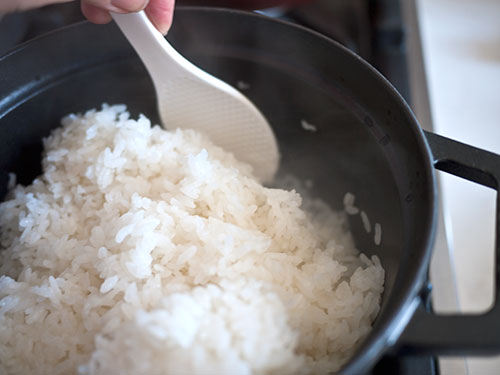
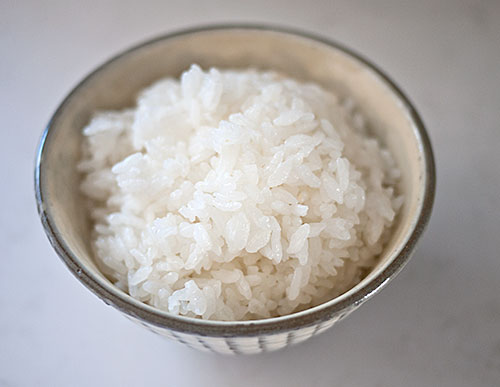
Japanese Basics: How to make Japanese-style plain rice and sushi rice
This is the first how-to and recipe that I posted on Just Hungry. Properly cooked rice is the foundation of a traditional Japanese meal, and you absolutely cannot skimp on the steps detailed here if you are aiming for anything approaching authenticity. I've edited the text to make some things clearer. Back to basics! Originally published in November 2003.
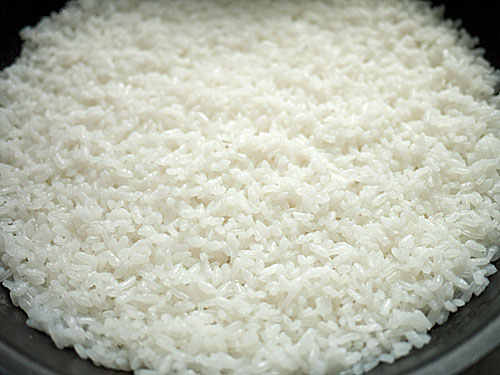
Rice is the staple of Japanese food, and making it just right can be rather difficult if you don't know how. If you think you will be preparing rice regularly, an electric rice cooker will make your life so much easier. You can cook non-Japanese style rice in it too, though I tend to make those in a regular pan. continue reading...
How to cook lotus root (renkon)

Lotus root (renkon in Japanese) is actually the rhizome of the lotus plant. It’s a popular vegetable throughout southern and eastern Asia, but it’s still not that well known in the west. Lotus root is full of fiber and various vitamins and other nutrients. In Asia it’s believed to have various medicinal qualities, but in macro-nutrient terms it’s best to think of it as a starchy vegetable, like potato. Visually of course, it’s very appealing with all those little holes. Here I’ll explain how it’s prepared and eaten in Japan. continue reading...
Variable Roasted Vegetables (an everyday favorite)

Following up on the previous post where I asked about your favorite go-to everyday dishes (keep your ideas coming!) I thought I’d introduce some of mine. The posting of them may be sporadic, since I’ll be taking pictures and things when I actually made them for dinner.
First up is something that is very easy to assemble, quite healthy, cheap, as seasonal as you want it to be, and almost infinately variable. It’s simply roasted vegetables. I make this all the time, throughout the year, using whatever vegetables I have. It’s a good refrigerator-clearer too. continue reading...
Favorite everyday go-to dishes
Here are some of my favorite ‘go-to’ meals, that I go back to time and again. Most take minimal effort to make and are quite healthy. They are all very good of course!
The role of alcohol, onion and ginger in Japanese meat dishes
Periodically, someone asks a question about subsituting or leaving out sake or mirin from a dish (most recently to the chicken karaage recipe). This reminds me of how certain ways of thinking exist in Japanese and East Asian cooking, that may not necessarily exist in Western cooking. One of those is the perception of the flavor of meat. continue reading...
How to cook taro root or satoimo

How to prepare that hairy looking beast, the taro root or satoimo. continue reading...
Cooking whole dried soybeans

Until fairly recently I had a blind spot when it came to the humble soybean. I regularly consume soy products like soy milk, tofu and okara, not to mention fermented soybean products like natto and tempeh. And green soybeans or edamame are always a great snack.
But for some reason, I didn’t really get into eating the whole dried (and cooked) soybean. It’s not that they are that much harder to cook than other dried beans either.
In any case, I’ve rectified that situation and now I cook up a batch of soybeans quite regularly and store them in the freezer. Plain boiled soybeans are amazingly delicious, and just packed with nutrition. The cooking liquid is so rich that it can be used as a very nutritious stock or dashi for making soups and such.
There are a couple of points to watch out for when cooking whole soybeans, which are noted below in copious detail. continue reading...
Vegetarian / Vegan dashi (Japanese stock)

As I’ve stated many times here over the years, the basis of most Japanese savory foods is a good dashi, or stock. Dashi is not just used for soups, it’s used for stewing, in sauces, batters, and many, many other things.
The regular way to make dashi was one of my first entries on Just Hungry. It uses kombu seaweed and dried bonito flakes (katsuobushi). Some people use niboshi, small dried fish, in addition to or instead of bonito flakes.
Katsuobushi and niboshi are both fish-based, so not vegetarian. So how do you make a good vegetarian, even vegan, dashi? continue reading...