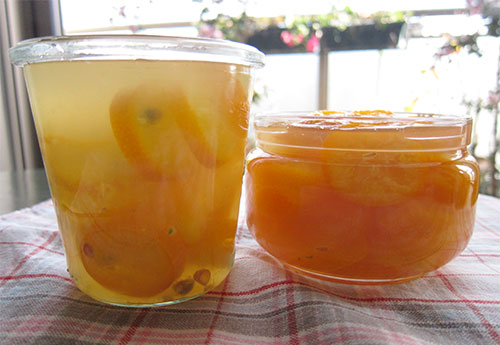
Catching up on various things, plus a not-really-a-recipe for yuzu tea or yuzu-cha.
Filed under:
japanese winter washoku writing elsewhere japan times citrus
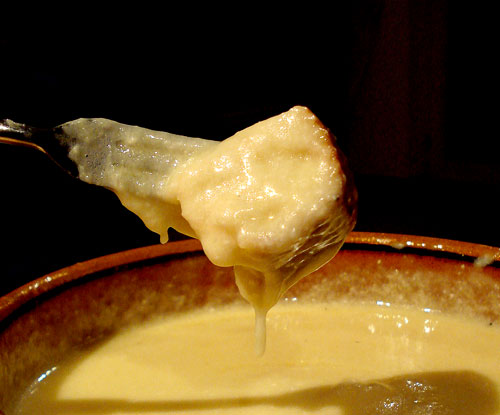
(The 10 year anniversary of JustHungry is at the end of this month. To commemorate this pretty big birthday for the site, I'm highlighting some of my favorite posts from the archives. This recipe is for an authentic Swiss cheese fondue. It was my late mother in law Martha's recipe. It's perfect for a chilly evening. Originally published on December 26, 2008, one year after Martha passed away.)
Martha passed away on the 26th of December, 2007. When she was still healthy, we shared many a pot of cheese fondue with her during the cold winter months. Her fondue was without question, the best I've ever had anywhere. So in her memory, we made a proper cheese fondue.
I've already posted Martha's fondue recipe 5 years ago (she was still making them then), but since it was one of the very early posts here on Just Hungry, it has no relevant picture to accompany the recipe or anything. To rectify that, here again is Martha's proper Swiss fondue, with many photos and detailed instructions.
Filed under:
cheese party food swiss winter favorites
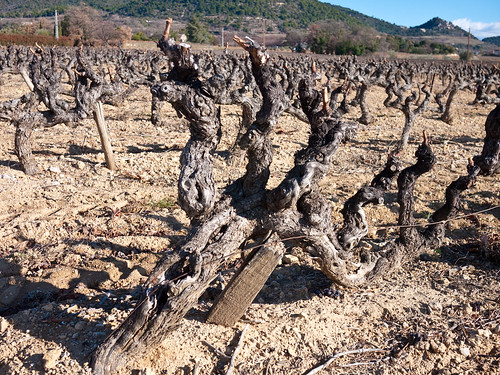
Some weeks to go until spring, but in the meantime the scenery is beautiful.
Filed under:
winter provence france monday photos
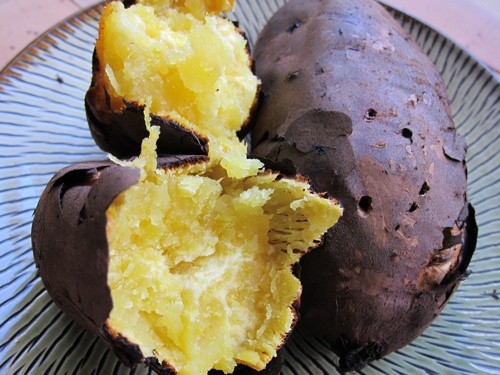
This month's Japan Times article is about sweet potatoes*, which are called satsumaimo in Japanese.
Filed under:
fall potatoes winter writing elsewhere japan times
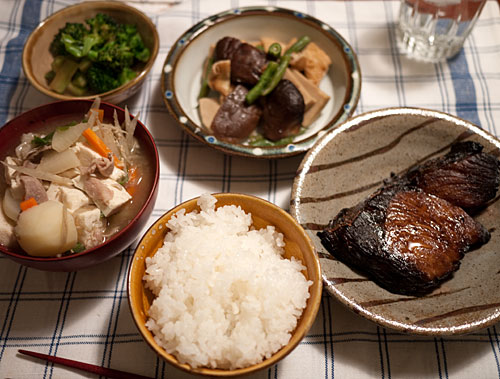
A new article in The Japan Times about winter fish, and how fish fits into a typical Japanese meal.
Filed under:
japanese fall winter fish japan seafood washoku in the media writing elsewhere japan times
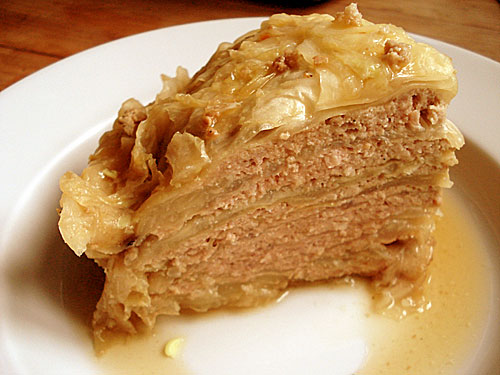
(From the archives. A perfect leave-to-cook, warming dish for a cold evening! Originally published December 2008.)
Some dishes dazzle you with their prettiness. Others may look plain, but are just plainly delicious. This simple, filling yet healthy winter dish of cabbage layered with a meat and tofu stuffing and then poached in a flavorful liquid belongs to the latter group.
Filed under:
winter yohshoku favorites meat cabbage slow cook
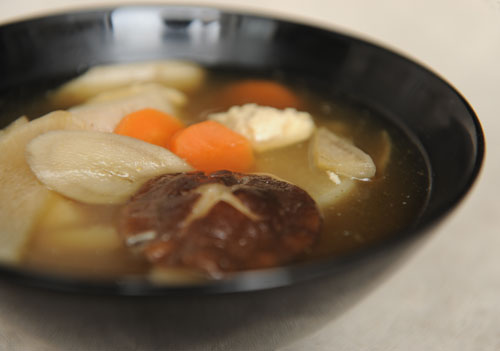
It's been a cold and snowy winter so far around these parts, which usually means soups and stews for dinner. This classic Japanese soup is hearty yet low in calories, full of fiber, and just all around good for you. It helps to counteract all the cookies and sweets you might be indulging in at this time of year.
The name kenchinjiru (けんちん汁)derives from the Zen Buddhist temple where it was first made (or so it's claimed), Kencho-ji (建長寺)in Kamakura. (Kamakura (鎌倉) was, for a brief while, the capital of Japan in the 12th and 13th centuries. Nowadays it's a major historical tourist attraction, and a fairly easy day trip from central Tokyo.) Since kenchinjiru is a shojin ryouri or temple cuisine dish, the basic version given here is vegan. It's still very filling because of all the high fiber vegetables used. You could make a very satisfying vegan meal just from this soup and some brown rice.
Filed under:
japanese lighter soup winter vegetarian favorites vegan washoku shojin
Originally published in December 2005, edited in November 2008.
Filed under:
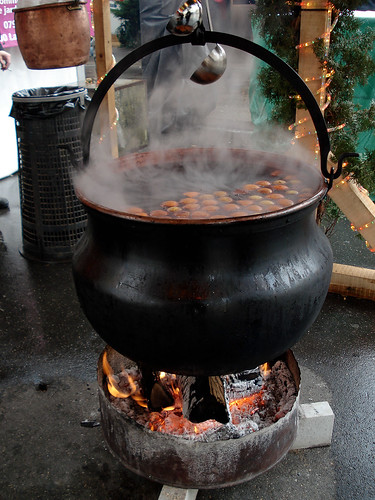
drink winter christmas
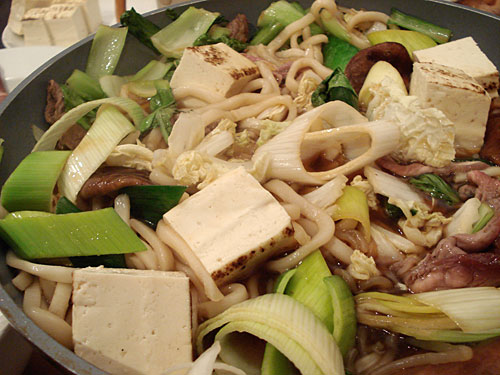
Sukiyaki (すき焼き)is a Japanese word that is widely known outside of Japan, but very few people have actually had the real thing unless they've been invited to a Japanese person's home for dinner - or gone to a traditional inn or ryoutei (high end traditional Japanese restaurant) where it is cooked for you at the table. This is because, like tori nabe, this is really another nabe that is cooked at the table, at home, rather than eaten at a restaurant. You may encounter 'sukiyaki' on some restaurant menus, but if it's been cooked in advance in the kitchen, it really isn't sukiyaki. (I'm not sure why there are dedicated shabu-shabu restaurants but no sukiyaki restaurants, but I think it's because sukiyaki is so strongly associated with home cooking.)
Unlike tori nabe, sukiyaki is not inexpensive, since you need top grade steak-quality meat. If you have access to a Japanese grocery store or a butcher that is familiar with the 'sukiyaki' cut, you can buy ready-cut meat there. (In New York, I used to get sukiyaki meat from Schaller and Weber on the Upper East Side). If you can't get sukiyaki meat, get a piece of sirloin with a good amount of marbling and a thick piece of fat attached. Allow for about 100 grams / 3 1/2 ounces of meat per person. You do not need to use wagyuu or Kobe beef - that would be overkill. In Japan, sukiyaki is the quintessential gochisou (御馳走) - feast or treat, because good beef is the most expensive kind of meat. It's what you have for a special occasion, or just after payday.
Sukiyaki can be enjoyed at any time of the year, but any kind of nabe seems to be best suited to the winter, when the family can gather around the dining table helping themselves from a fragant, steaming pan of food.
There are two basic methods of making sukiyaki: Kanto, or Tokyo-area style, and Kansai, or Kyoto/Osaka area style. Since I'm from the Tokyo area I'll show you how to do the Tokyo style, with a recipe for the Kyoto method below.
Filed under:
japanese party food winter favorites beef washoku nabe
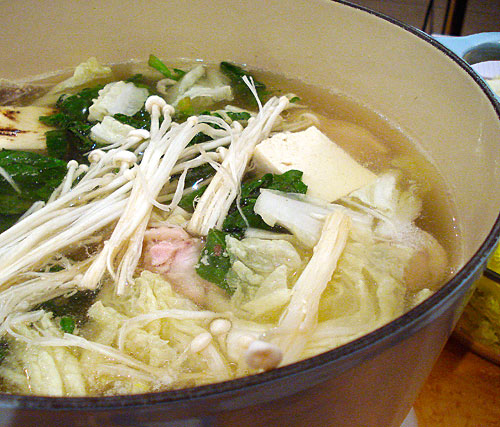
Nabe (鍋, pronounced NA-beh) is the Japanese word for a pot or pan. But it also means a one-pot dish where several ingredients are cooked together in a broth. While nabe can be cooked in the regular way on the stovetop, the most popular kind of nabe are cooked at the table on a portable burner. The quintessential image of a Japanese happy family is one that gathered around the dining table eating a nabe. (Nabe cooked at the table is also called yosenabe (寄せ鍋), which just means a nabe where the ingredients are gathered together (寄せる、yoseru).
Because a nabe is piping hot, it's a great winter meal, with very little preparation.
A lot of Japanese nabe recipes call for ingredients that are only widely available in Japan, but this is a recipe for a nabe that you can recreate wherever you are. It uses chicken and a lot of vegetables, so it's very healthy and frugal - perfect recession cooking! The only special equipment you need is a tabletop cooker of come kind, that can sustain a boiling heat. See more about tabletop cookers in the Notes at bottom.
Filed under:
japanese lighter party food winter quickcook chicken washoku nabe
Pages

 Welcome to Just Hungry, where we serve authentic Japanese recipes and more! I'm